USD
USD 
[vc_row][vc_column][vc_column_text]

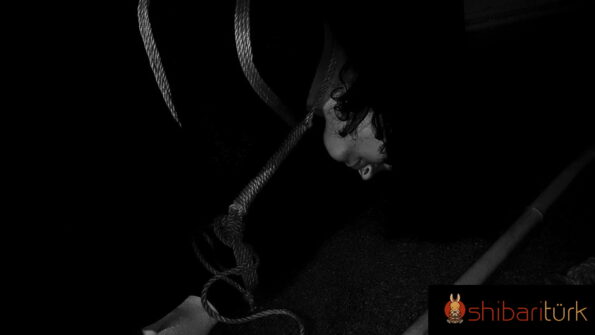
“Ebi” (also known as kuri) means shrimp in Japanese, and “ebi-seme” (shrimp torture) is one of the ancient Japanese torture methods. The binding forces the prisoner's body to curl up like a shrimp, thus applying very tight pressure to the upper body and feet.
Most people cannot hold this pose for long. In modern Japanese kinbaku, it is called "agura". Shibari – The term ”cross-leg tie“ (barbarian-style sitting tie) or ”zazen shibari“ (meditation/Buddhist-style cross-legged tie) refers to the binding in this cross-legged position. If both legs are tied close to the upper body, the tie is called ”ebi shibari” (shrimp tie). The second tie does not necessarily have to be crossed, however, the terminology is generally agura Shibari They are used interchangeably. Compared to the ancient ebi-seme, the modern ebi knot has been revised to be more secure, taking on a form that does not put as much strain on the rope bottom.
Ebi bağında, bir TK veya Gote-TK kullanılır ve bacaklar boyun etrafından veya TK’ya bağlanan ikinci bir ip yardımıyla sabitlenir. Temel prensip tamamen oturur pozisyonda ve hareketsiz bırakmaktır.[/vc_column_text][vc_gallery type=”grid” images=”617,615,616,76″ img_size=”200×200″ grid_number=”4″][/vc_column][/vc_row]
 Türkçe
 English