USD
USD 
In our country, this knot, called the "half-stake" or "Italian knot," is used by mountaineers and cavers as part of a lifeline or safety system. In Shibari, it is generally used at the intersection or meeting points of ropes to change the direction of the rope, to create a unified whole with other ropes, and for decorative purposes.

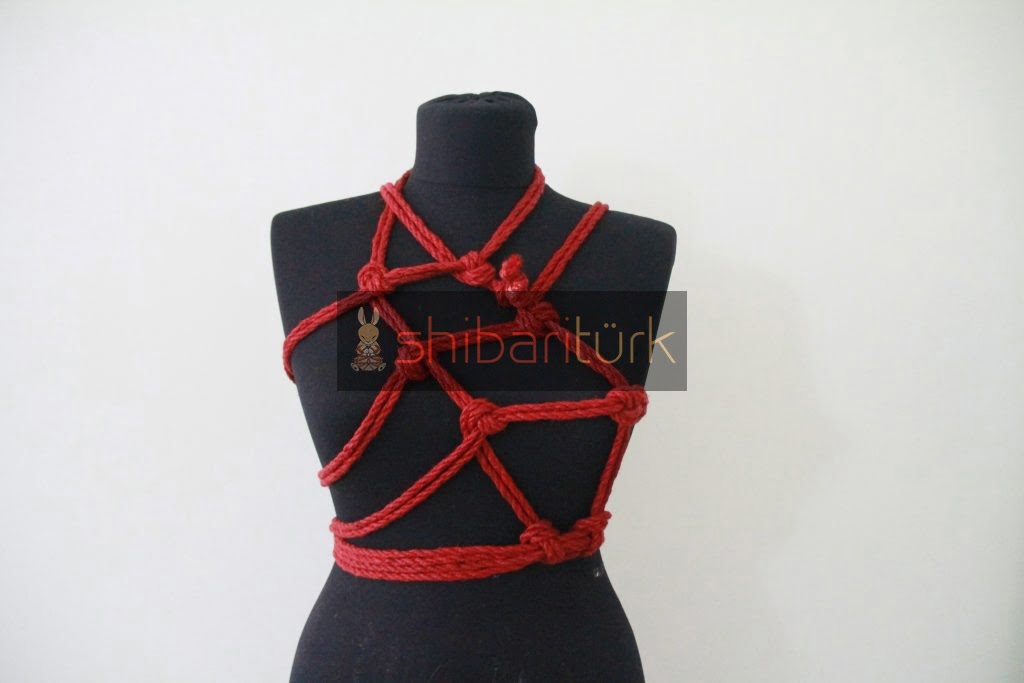
In western shibari, Crossing Hitch; In traditional Japanese kinbaku and shibari, however,“no-dome”It is called a "Munter hitch". Sometimes, to refer to the function of the node, it is also called a "Cross Friction (Crossing Hitch)". In the futomomo example you see in the image, the node used in the areas indicated by the red circle is a "Munter hitch". You can create a simple set of bindings using only a Munter hitch and a single column or bowlline.
Besides being used for decorative purposes, knots are also used to increase the integrity and strength of the rope.
You can watch how to tie the knot in the video below.
Reverse Munter Hitch
This knot, described above, is used to intersect more ropes or to provide a stronger and more secure grip. Also known as the "Twisted Cross" until the early 2000s, it is often used when it is difficult to pass the entire rope under other ropes, such as in the Munter Hitch, where tighter rope wraps are encountered. Because it provides a maximum grip and minimizes friction, it is more secure and reliable.
You can watch how to tie the knot in the video below.
Let's improvise and weave a net with rope.
- Start by selecting a point (such as the right wrist) using a Single Column node.
- Let go and be creative.
- When two ropes cross, use the Crossing Hitch to continue.
- Try using the knots on sensitive areas.
- If you liked it, feel free to add more strings. 🙂

 Türkçe
 English