This guide aims to convey bondage/shibari safety and basic information from a rope bottom perspective. In bondage, a dual performance, it is important for the bottom to apply the fundamental principles of safety and rope usage and to participate in the performance.
One of the most important things to remember about bondage is that, alongside the fun, there's always a risk. Even if you're working with the best rigger, there are always risks associated with a bondage scenario. You can minimize this risk by being aware, knowledgeable, and working with a skilled rigger. You can greatly reduce the risks of bondage with your knowledge and self-awareness, but you can't eliminate the risk entirely.
This article is a general guide; it is not suitable for every bondage situation and scenario, or every body type. It is important to remember that every person's body is different, and what is right for you may be dangerous for another. If you participate in a sport like fitness, your body is more flexible and better suited to your capabilities. If you don't, body flexibility exercises at a certain level will make a significant difference. It is your responsibility to communicate and provide feedback before, during, and after bondage.
Some experienced and skilled riggers may adhere to risk-aware, high-risk guidelines. In such a case, don't hesitate to question any rules that don't suit you, considering the extent to which the risk factor is being ignored and how much risk you are taking.
Responsibilities of the Parties
Shibari, This involves many important considerations regarding safety and health. Both the rigger and the model have certain responsibilities to ensure that this art is practiced safely and healthily.
Be Sure to Keep It
During the tying process: Safety scissors, a sugary drink or water.
Responsibilities of the Rigger
Education and Information:
The rope tying technique requires a sufficient knowledge of anatomy and safety issues. In particular, they must be knowledgeable about sensitive areas such as nerves and blood vessels, and should avoid these areas when tying ropes.
Contact Us:
Continuous and open communication should be maintained. The model's comfort level should be checked regularly, and any discomfort or numbness should be noted. A safety word should be established, and the restraint should be stopped immediately when this word is used.
Equipment Control:
The quality and condition of the ropes used should be checked regularly. Worn or damaged ropes should not be used. It must be ensured that the ropes are clean and hygienic.
Security and Emergencies:
A cutting tool (such as safety scissors) should always be readily available during tying. Be prepared to quickly cut the ropes and free the model in case of any emergency.
Technical Application:
The tightness of the ropes, knots, and tension points should be carefully checked. Avoid tying things too tightly that could restrict blood circulation or damage nerves.
Responsibilities of the Connected Person (Model)
Contact Us:
If the patient experiences any discomfort, pain, numbness, or any other abnormality, they must report it immediately to the rigger.
The word "security" should not be used when necessary.
Preparedness and Health Status:
The person must provide accurate information about their health status. They should inform the rigger of any health problems or conditions that could affect bonding (e.g., circulatory problems, nerve sensitivity).
One should drink plenty of water before and during the binding process and make sure not to go hungry.
Physical Preparation:
He/she must check if his/her body is suitable for the restraint. Extreme fatigue or physical discomfort can make the restraint dangerous.
They should wear comfortable clothing and perform any necessary stretching exercises before tying the knot.
Position Changes:
In long-term restraints, the rigger should be informed when position changes are needed. Remaining in the same position for extended periods can lead to circulatory problems and nerve damage.
Emergency Scenario
To better illustrate how to react in the event of an adverse situation during the restraint process, let's imagine the model experiences numbness in their arm during the restraint.
Condition: Model experiences numbness in arm during fastening.
The Use of the Word Security:
The model uses the "red" safety word when she feels numbness in her arm.
Rigger stops immediately to relieve the model and loosens the ropes.
Contact Us:
Rigger asks where and what kind of numbness the model feels.
The model describes the severity and location of the numbness.
Rapid Response:
Rigger takes the safety scissors and carefully cuts the ropes on the model's arm.
Once the strings are cut, the model's arm is free, and the numbness subsides.
Situation Assessment:
Rigger examines the model's arm to check for any damage.
The model reports whether the numbness has gone away and how their arm feels.
Rest and Recovery:
The model rests for a while and then moves its arm to allow blood circulation to return to normal.
Rigger, during this time, performs supportive actions such as comforting the model and giving it water.
Afterwards
Evaluation and Feedback:
Rigger and the model assess the situation and discuss additional measures to be taken for such emergencies.
They decide which techniques or ropes should not be used to prevent a similar situation from happening in the future.
Development and Education:
Rigger is considering receiving further training in safety and restraint techniques.
The model continues to listen to her body in order to better understand her own limits.
This scenario, Shibari It demonstrates how to be prepared for and manage emergencies that may arise during practice. The word safety, having cutting tools readily available, and constant communication ensure a safe and healthy environment. Shibari This is critically important for the experience.
RIGGER SELECTION
Ideally, your rigger should be a good communicator, have a good knowledge of anatomy, and know how to react to potential risks and emergencies. Your rigger should have a high level of knowledge and experience.
How do you measure if Rigger is competent enough?
This is definitely a difficult question. Every rigger has their own technique, level of knowledge, and style. Judging them as good or bad at this point will be difficult. However, some tips will help you.
What kind of bondage experience is it?
Having years of experience doesn't automatically mean someone is a skilled rigger. It might simply mean they've been incredibly lucky, performing risky bondage practices for many years without any problems. However, when considered alongside other factors, experience can be a good indicator.
How Confident Is He In His Rope Bondage Skills?
Try to understand how confident they are in their control and abilities by talking to them. Some riggers may not be confident in everything. They have a certain idea of their limits and capabilities. Even if a rigger has years of experience, things like how many people they've bound and whether they've taken long breaks are important. Try to distinguish between self-confidence and arrogance.
Do they have any references?
If this is your first time being connected with this person, it's a good idea to check their references. Asking another experienced and trusted rigger (preferably one who connected you) if they know them is always a best approach. Try to find out the reasons from those who give negative references.
Does Rigger know about the restrictions of the regions it will be connecting to?
It's important that you know the correct answer when asking this question. I recommend learning as much as you can about bondage and anatomy. At this point, it might be helpful to discuss and exchange ideas about your personal health conditions and sensitive areas.
Is there any security equipment?
Having a bandage shears or other suitable cutting tool to cut strings in emergencies is crucial when a risk arises. If you don't have one, I recommend evaluating whether they have adequate responsibility.
PREPARATION FOR THE STAGE
If you have a fresh wound on your body, report it and wait for it to heal. Use your physical resources to repair your wounds.
Make sure you get enough sleep; bondage while sleep-deprived will only cause you more stress.
Make sure your body is getting enough nutrients and water. Since the body loses more water in the summer months, hydrate right before the scene. Remember that a scene can last between 1 and 4 hours.
If a scene is scheduled, avoid eating excessive, carbohydrate-rich foods for up to three hours beforehand. This precaution reduces the likelihood of vomiting during suspension scenes. Eat light meals, including some protein, fruit, nuts, or vegetables to maintain your energy levels.
Do some stretching and flexibility exercises. This warms up your muscles, triggers the release of endorphins, and makes you more resistant to pain for longer. (Article 8)
Discuss the scene with the person who will be connecting you. Knowing what to expect will speed up your psychological preparation.
Make sure your body is clean. If possible, take a shower before the performance.
ANATOMY
Having knowledge of human anatomy will lead to a safer bondage experience. Basic knowledge of nerves and blood circulation will also allow you to understand your rigger's level of knowledge.
In cases of nerve damage, you may experience long-term loss of sensation, which can significantly negatively impact your quality of life. Therefore, preventing nerve damage is crucial. These types of injuries are commonly seen in suspension training.
Figure 1 - Nerve and Blood Circulation
NERVE AND CIRCULATORY PROBLEMS
Tingling or pins and needles sensations in your hands or any part of your body should alert you that something is wrong. The two most common causes of these tingling and pins and needles sensations are poor circulation and nerve damage.
There are several symptoms that can help you understand what the problem is; these symptoms may not be present in every case, but they will usually help.
Nerve damage is unique because in most cases only one part of the hand becomes numb and you experience a tingling sensation. A characteristic of nerve problems is that this sensation occurs only in one part of the hand. The most common type of nerve compression is known as "Carpal Tunnel Syndrome" and affects the wrist and fingers. This condition, which occurs when the median nerve, which goes to the first four fingers of the hand, is compressed at the wrist, is the most frequently encountered nerve damage.
Figure 2 – Nerves in the Hand
Some methods for monitoring nerve damage include:;
Your rigger may ask you to squeeze their hand. This is to gauge how strong your squeeze is.
The Gambling Test might ask you to bring your thumb and index finger together (making an OK sign).
You may be asked to hold your hands back-to-back with your wrists bent for one minute. This is called the Phalen Test. If you experience tingling or a pins-and-needles sensation, there is a problem.
Symptoms of nerve compression and damage include:;
Numbness and loss of sensation in the area of nerve compression.
Pain and burning sensation in the area where nerve compression occurs.
Tingling, pins and needles sensation
Muscle weakness in areas where nerve compression occurs.
Muscle twitching or muscle fatigue
Softness in the area where nerve compression occurs.
Increased or decreased sweating
A sharp and intensifying pain
Difficulty moving the hands and feet.
More susceptible to heat and cold.
If your symptoms persist for two hours, you should see your doctor.
Restricted blood circulation can cause numbness and bruising. Circulation should be avoided by leaving some slack in the slings.
Avoid tying knots around blood vessels, such as the inside of the wrist. Hands and arms are generally the most sensitive areas, and most pain and fatigue begin in these areas.
If there are circulation problems, the skin may start to bruise or change color. Color change is individual; in some people it may be observed quickly, while in others it may occur more slowly. If discoloration occurs, the strings should be cut or loosened. Another common symptom of a circulation problem is numbness or tingling in your entire hand, arm, leg, or attached body part.
The following can be used to help resolve circulatory problems:
Reduce rope tension.
If connected in Box (TK) mode, change the position of the arms.
Stretching your muscles will help improve blood circulation; clasping and unclenching your hands can help relieve tingling.
The main concern regarding circulatory problems is that their symptoms can mask those of the nervous system. In some cases, the presence of the same symptoms can make it difficult to determine whether the problem is a nervous system issue or a circulatory problem.
Our recommendation is to untie the strings as soon as you experience any tingling sensation. Wait a while, and if the tingling subsides, you can continue from where you left off. It is your responsibility to report all such situations immediately. Your Rigger will then take the necessary precautions and implement safety protocols accordingly.
NERVES AND NERVE MOBILIZATION
The function and sensation of the muscles in our hands are provided by three nerves called the median, ulnar, and radial nerves.
Nerves originating from our spine provide movement to our muscles and joints, as well as sensory innervation to those areas (sensations such as touch, heat, and pressure). Any disruption in the movement of these structures (nerves) can cause various problems in the body, such as pain, numbness, tingling, and burning, as well as decreased sensory and muscle strength. For example, numbness and tingling sensations in the hands and fingers experienced with neck or lumbar disc herniations, and all the discomfort experienced in carpal tunnel syndrome, which we call nerve compression, can be included in this group.
Therefore, in disorders originating from the spine and the nerves emanating from it, evaluating and treating only the musculoskeletal system can lead to unsuccessful treatment outcomes. In this situation, neuromobilization or neurodynamic techniques, which have been applied for many years, especially in Europe and America, rely on maneuvers and movements similar to those in the musculoskeletal system. These techniques are based on the principle of moving nerves through sliding or stretching techniques. Patients are also shown specific exercises and techniques they can perform at home. These movements and stretches of the nerves treat problems related to nerve transmission and circulation very quickly and effectively.
First, let's briefly describe the nerves that are relevant to us, as shown in Figure 3, before moving on to how you can perform self-mobilization.
Figure 3 – Nerves in the Arm and Hand
RADIAL NERVE
The radial nerve is a branch of the brachial plexus. One of the main nerves of the arm, the radial nerve extends from the shoulder to the hand. It controls the muscles that straighten the wrist. It transmits sensation to the back of the forearm, the thumb, index finger, middle finger, and the thumb arm. The radial nerve can be damaged by conditions such as a humerus (upper arm bone) fracture or prolonged pressure on the armpit. This damage manifests as wrist drop (inability to straighten the wrist) and numbness in the skin areas supplied by the radial nerve.
The median nerve is one of the main nerves of the arm. A branch of the brachial flexure, the median nerve runs down the arm from the shoulder to the hand. It controls the muscles that flex the wrist, fingers, and thumb, as well as the muscles that allow rotation of the forearm into the palm. The nerve also transmits sensation to the thumb, the first three fingers, and the palm. Conditions such as shoulder injuries, a Colles fracture just above the wrist, or pressure on the nerve as it passes through the wrist (carpal tunnel syndrome) can result in damage to the median nerve. Symptoms include numbness and weakness in the areas controlled by the nerve.
The ulnar nerve, originating from your spine, powers some muscles in your hand and provides sensation in your little and ring fingers. As the nerve descends into the arm, it passes anteriorly at a bony prominence called the medial epicondyle at the elbow. At this point, it comes very close to the surface. A sudden touch in this area can often cause temporary irritation of the ulnar nerve.
It can cause pain and tingling in your hand, which is why this area is often known as the "funny bone." During our daily lives, this nerve can be stretched and become trapped between the bony prominences at the elbow as we move around. If the nerve is under excessive pressure or regularly stretched, longer-lasting 'ulnar nerve' symptoms can develop.
There are different reasons and techniques for variations of each box tie. Each variation is constructed in a specific way, has different functions, and carries different known risks. In principle, it's best to avoid any knot that will constrict the wrists with any tie, as this will increase the risk of circulatory and nerve problems.
Box ties (TK) are often criticized for the risk of radial nerve damage. The radial nerve provides sensation and muscle control for the mobile parts of the arm. If damaged, you may experience loss of movement or sensation. Maintaining a proper posture with your forearms crossed is crucial.
It can be difficult to pinpoint the exact location where the radial nerve is sensitive. The sling should be used with consideration for the physiology of the person being restrained. It is up to you to provide feedback to your rigger and be aware of how your body reacts to the sling. You may not notice anything until you are restrained or pressure is applied. Remember, symptoms of radial nerve problems often begin in the fingertips of the hands and progress up the upper arm.
If a boxing style makes you feel bad, if you feel something is wrong, or if you're experiencing nervousness, loosening the wraps slightly can make a huge difference. Feedback and communication are important as you discover the right wrapping style for your body.
PARALLEL BOX CONNECTION
Figure 4 – Basic Stance of TK/Box Binding
As you gain more experience, you will discover your preferred hand and arm positioning. Remember that there is nothing wrong or incorrect about making this choice; it is entirely up to you. In a "parallel box ligament," the wrists and forearms, as well as the upper arm, hand, and wrist bone, are sensitive areas due to the nerves being close to the surface.
Harness (HarnessThe ligaments begin with a loop around each arm. Depending on flexibility, this loop may go around your wrists or forearms. The forearm area is quite sensitive due to the radial nerve, which runs along the back of the forearm. If the ligaments put pressure on the forearm, they can damage the radial nerve.
People often think that only the bandages wrapped around the upper arms cause radial nerve damage, but more often the injuries are caused by bandages and ligaments near the wrists.
If you experience tingling in your hand, ask your rigger to slip a finger under the wraps at your wrist and loosen them slightly, and observe if this makes a difference. This might save you more time in a binding or make your rigger more comfortable while unwrapping you.
If you are inexperienced, we recommend that your wrists face each other to protect the sensitive area on your wrist. If your wrists (inner wrists) face each other, the straps will tie and wrap around the outside of your wrist. Feel free to move your arms to find the best position. Do this carefully and consciously. It is important to contact your rigger if you encounter any problems or are unsure.
Some people position their thumbs in a hook shape, as shown in the image on the left, to support their elbows. You should be aware that this position can cause problems, but what matters most is what's comfortable for you. Sometimes, when in a sling, it can be difficult to move your hands out of this position as the pressure on your arms increases. You may not be able to reposition your arms if it becomes uncomfortable.
This position is likely and risky, especially during suspension, as it can lead to nerve problems due to pressure and compression. Instead, keeping your hands free behind you will provide you with a more comfortable posture and security. Positioning your wrists as shown in the image on the right will be better for you. You will be able to improve your positioning and alignment according to your own physiology as you experience it.
Advantages of Standard Box Binding
It has a low risk compared to other ties.
It can be used in many positions.
It allows you to continue the scene with other additional connections, and is suitable for transitional connections.
GOTE or HIGH HANDS TK
The Gote (hands tied behind the back) involves all the usual risks of a classic box tie (or takate kote), but it also requires the bottom to have more flexible arms to ensure the hands are in the correct position.
This binding is usually done by wrapping it around the arms, starting at the wrists, and kannuki It is done tightly without any restraint. Therefore, you must be sure of and trust the abilities of the person tying you up (the rigger).
In a gote tie, the bottom's hands are tied as high as possible. Gote can be stressful depending on how flexible your arms and shoulders are. Because the knots start based on the position of your arms and your hands are tied as high as possible, you may not be able to reposition or move your hands. Due to the nature of gote, you may feel more pressure on your arms, making you more vulnerable.
In this context, you cannot change the position of your hands. If you have circulation problems, or if they arise during binding, raise your torso to an upright position. This will make you feel more comfortable.
GOTE or LOW HANDS TK
This restraint can be used if you prefer your hands to rest comfortably on your back. It may be suitable if you have difficulty keeping your hands in a box on your back or if you lack the flexibility for a position such as the elevated hand position. This restraint carries a lower risk compared to other restraint methods used in TK.
The wrist can be reinforced with extra knots, and you can also use different decorations and patterns.
HARNESS (HIP – WAIST)
There are as many different harness variations as your imagination can create, each with a different function and aesthetic, similar to chest harnesses.
Generally, using more rope will result in less stress because there is more rope supporting your weight. Depending on the binding method used, the more wraps around the legs or hips, the more comfortable it will be; a lower number will result in more stress and discomfort.
A waist harness The belt typically wraps around the waist two or three times and consists of a simple knot at the front. If used for single-point suspension, it can be quite stressful depending on your body weight.
When tying the rope around the waist and hips, tying it around the relatively narrower waist eliminates the risk of the rope loosening and slipping. However, for suspension or other situations that will create relatively greater pressure, most bottoms report that they feel more comfortable when the rope is tied around the hip bones. The hip bones are very strong, and tying it here can balance the body's center of gravity while protecting internal organs. For situations where the test sling position (feet up, head close to the ground) is used during suspension, tying it at the narrowest point of the waist (to prevent slipping and the rope from becoming loose) is recommended; for other suspension applications, tying it around the hip bones is advised.
FUTUMOMO
While Futumomo is useful and comfortable for ground bindings, it's one of the few types that's quite stressful and painful for suspension. Rigger needs to have top-level skills and be able to analyze the painful steps well.
This type of binding, especially suspension, is a difficult method that requires practice. Feeling more pain than pleasure in your first attempts doesn't make your rigger a bad rigger or you a bad bottom. Regardless of your rigger's level and experience, give yourself time to get used to it.
STRESS
Bondage causes varying degrees of stress on the body. This is true for suspension and partial suspension bondage, and even some floor bondage work. To help you withstand this physical stress, you need to ensure you are as fit and healthy as possible. A physically fit person can endure bondage longer than an unfit person. They are also more resistant to conditions such as rope marks, bruising, and nerve damage.
Bondage can be emotionally stressful, so it's important to ensure you are prepared both physically and mentally for the experience. It's crucial to be calm and relaxed, and to be in a place where you feel safe.
The necessary flexibility cannot be achieved instantly, but must be maintained and developed consistently and regularly. You should warm up and stretch your muscles before the performance. Practicing stretching exercises is a good way to do this. If you know which position you will be in, you can concentrate on the muscles that will be under strain.
These exercises help improve blood circulation and prevent conditions such as muscle tension, tingling, and muscle pain.
BODY AND AMBIENT TEMPERATURE
If you are cold, your endurance and the duration of your captivity will decrease. Wait for your body temperature to return to normal, and if bondage will take place naked, ensure the ambient temperature is adequate (but not too hot). If you are going to be tied up outdoors or in a cold area, wear something warm. Be sure to drink water before starting and between breaks.
NUTRITION
Before bondage scenes, make sure you don't skip meals and that you're not hungry. Keep water, drinks, and snacks handy for long scenes.
DROP
You may feel like you've reached a point where you can't bear it any longer. Don't panic, stay calm and composed. Moving your body, hands, and arms impatiently will only make the rigger's job harder and you could also cause yourself permanent damage.
After bondage, perform slow stretching exercises. Avoid sudden movements, as abrupt movements can be harmful and risky for your muscles and joints. These exercises increase blood circulation, relax muscles, reduce pressure, and thus speed up the healing process against any potential unnoticed damage.
SUPPLEMENTARY READING RECOMMENDATIONS FOR ROPE BOTTOM
Our website uses cookies to provide you with the best experience and to improve our services. You can review our Cookie Policy to learn more about cookies or to change your preferences. By continuing to use our website, you agree to the use of cookies.
This website uses cookies to improve your browsing experience. Those cookies that are essential for the basic functionality of the website are stored in your browser. We also use third-party cookies that help analyze and understand how you use this website. These cookies will only be stored in your browser with your consent. You also have the option to disable these cookies. However, disabling some cookies may negatively impact your browsing experience.
Mandatory cookies are absolutely essential for the proper functioning of the website. This category includes cookies that provide basic functionality and security features. These cookies do not store any personal information.
Functional cookies help to perform certain functions on the website. For example, sharing content on social media platforms, collecting feedback, and providing other third-party features.
Performance cookies are used to understand and analyze key performance indicators of a website. This helps to provide visitors with a better user experience.
Analytical cookies help understand how visitors interact with the website. These cookies provide information about metrics such as visitor count, bounce rate, and traffic source.
Advertising cookies are used to deliver relevant advertisements and marketing campaigns to visitors. These cookies track visitors' movements across websites and collect information to provide personalized advertising.
 USD
USD 
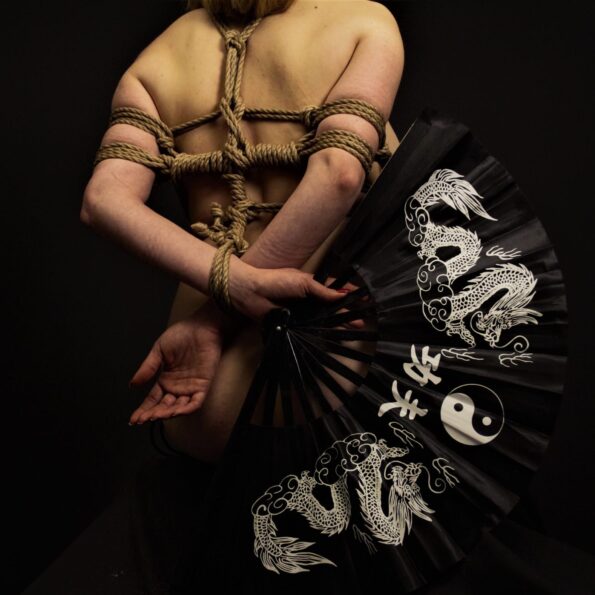


 It can be difficult to pinpoint the exact location where the radial nerve is sensitive. The sling should be used with consideration for the physiology of the person being restrained. It is up to you to provide feedback to your rigger and be aware of how your body reacts to the sling. You may not notice anything until you are restrained or pressure is applied. Remember, symptoms of radial nerve problems often begin in the fingertips of the hands and progress up the upper arm.
 Some people position their thumbs in a hook shape, as shown in the image on the left, to support their elbows. You should be aware that this position can cause problems, but what matters most is what's comfortable for you. Sometimes, when in a sling, it can be difficult to move your hands out of this position as the pressure on your arms increases. You may not be able to reposition your arms if it becomes uncomfortable.
 This position is likely and risky, especially during suspension, as it can lead to nerve problems due to pressure and compression. Instead, keeping your hands free behind you will provide you with a more comfortable posture and security. Positioning your wrists as shown in the image on the right will be better for you. You will be able to improve your positioning and alignment according to your own physiology as you experience it.
 This restraint can be used if you prefer your hands to rest comfortably on your back. It may be suitable if you have difficulty keeping your hands in a box on your back or if you lack the flexibility for a position such as the elevated hand position. This restraint carries a lower risk compared to other restraint methods used in TK.
 There are as many different harness variations as your imagination can create, each with a different function and aesthetic, similar to chest harnesses.
 While Futumomo is useful and comfortable for ground bindings, it's one of the few types that's quite stressful and painful for suspension. Rigger needs to have top-level skills and be able to analyze the painful steps well.
 Türkçe
 English
 Wartenberg Wheel 18.5 cm 10,96$ Remove