This guide rope bottom from the perspective bondage/shibari güvenliği ve temel bilgileri aktarmayı amaçlar. İkili bir performans olan bondage ’de, güvenlik ve ip kullanımının temel esaslarının bottom tarafından nasıl uygulanacağı ve performansa nasıl katılım sağlayacağı önemlidir. (“What is Shibari?” yazımızda shibari ile ilgili çok daha fazla bilgi bulabilirsiniz.)
One of the most important things to remember about bondage is that while it can be fun, there is always risk involved. Even if you are working with the best rigger, there are always risks associated with a bondage scenario. You can overcome this risk by being aware, knowledgeable and skilled. rigger You can minimize it by working with. You can greatly reduce the risks of bondage with your knowledge and self-awareness, but you cannot completely eliminate the risk.
This article is a general guide; it is not suitable for every bondage situation and scenario or every body type. It is important to remember that every person's body is different and what is right for you may be dangerous for someone else. If you are doing a sport such as fitness, your body is more flexible and more suitable for your abilities. If you are not in such a situation, body flexibility exercises that you do at a certain level and level will make a big difference. It is your responsibility to communicate and give feedback before, during and after bondage.
Some experienced and skilled riggers may resort to risk-aware, high-risk guidelines. In such a case, do not hesitate to question any rules that do not suit you at any point, considering the extent to which they ignore the risk factor and how much risk you are taking.
Responsibilities of the Parties
Shibari, contains many important points that need to be considered in terms of safety and health. Both connecting (rigger) and the connecting (model) parties have certain responsibilities to practice this art in a safe and healthy manner.
Be Sure to Keep It
While tying; Safety Scissors, A sugary drink or water.
Must have sufficient knowledge of rope tying techniques, anatomy and safety. Must be especially knowledgeable about sensitive areas such as nerves and veins and must tie while avoiding these areas.
Communication:
There should be constant and open communication. The model should be checked continuously to see if she is comfortable and if she is feeling any discomfort or numbness. A safety word should be set and the restraint should be stopped immediately when this word is used.
Equipment Control:
The quality and condition of the ropes used should be checked regularly. Worn or damaged ropes should not be used. It should be ensured that the ropes are clean and hygienic.
Security and Emergencies:
During tying, always keep a cutting tool (e.g. safety scissors) within easy reach. In case of an emergency during tying, be prepared to quickly cut the ropes and release the model.
Technical Application:
The tightness of the ropes, knots and tension points should be carefully checked. Tight bindings that will block blood circulation or damage the nerves should be avoided.
Responsibilities of the Connected (Model)
Communication:
If you feel discomfort, pain, numbness or any abnormality, report it immediately. riggershould notify.
One should not hesitate to use the safe word when necessary.
Preparedness and Health Status:
Kendi sağlık durumu hakkında doğru bilgi vermelidir. Varsa sağlık sorunları veya bağlanmayı etkileyebilecek durumlar (örneğin, dolaşım problemleri, sinir hassasiyeti) hakkında rigger’ı bilgilendirmelidir.
Before and during the binding, one should drink enough water and be careful not to go hungry.
Physical Preparation:
He/she should check whether his/her body is suitable for binding. Excessive fatigue or physical discomfort may make binding dangerous.
He/she should wear comfortable clothes and do the necessary stretching exercises before being tied up.
Position Changes:
Uzun süreli bağlamalarda pozisyon değişiklikleri gerektiğinde rigger’ı bilgilendirmelidir. Uzun süre aynı pozisyonda kalmak dolaşım problemlerine ve sinir hasarlarına yol açabilir.
Emergency Scenario
In order to better explain how to behave in a negative situation that may occur during the binding, let's imagine that the model feels numbness in her arm during the binding.
Condition: Model Feels Numbness in Arm During Binding
Use of Safewords:
The model uses the "red" safety word when she feels numbness in her arm.
Rigger, immediately stops and loosens the ropes to relax the model.
Communication:
Rigger, modelin nerede ve ne tür bir uyuşma hissettiğini sorar.
The model describes the severity and location of numbness.
Rapid Response:
Rigger, güvenlik makasını alarak modelin kolundaki ipleri dikkatlice keser.
Once the strings are cut, the model's arm is freed and the numbness subsides.
Situation Assessment:
Rigger, modelin kolunu inceleyerek herhangi bir zarar olup olmadığını kontrol eder.
The model reports whether the numbness has gone away and how your arm feels.
Rest and Recovery:
The model rests for a while and moves its arm to allow blood circulation to return to normal.
Rigger, bu sırada modeli rahatlatmak ve su vermek gibi destekleyici eylemlerde bulunur.
Afterwards
Evaluation and Feedback:
Rigger ve model, yaşanan durumu değerlendirir ve bu tür acil durumlar için alınacak ek önlemleri tartışır.
They decide which techniques or ropes should not be used to prevent a similar situation from occurring in the future.
Development and Education:
Rigger, güvenlik ve bağlama teknikleri konusunda daha fazla eğitim almayı düşünür.
The model continues to listen to her body to better understand her own limitations.
This scenario, Shibari It shows how to be prepared for and manage emergencies that may occur during practice. The word safety, having cutting tools ready and constant communication are essential for a safe and healthy life. Shibari is critical to the experience.
Ideally, your rigger should be able to communicate well, have a good knowledge of anatomy, and know how to act in possible risks and emergency situations. Your rigger should have a good level of knowledge and experience.
Rigger’ın yeterli olduğunu nasıl ölçersiniz?
This is definitely a difficult question. Each rigger has their own technique, knowledge level, and style. It will be difficult to evaluate whether it is good or bad at this point. But some tips will help you.
Yılların tecrübesine sahip olmak yetenekli bir rigger olduğu anlamına gelmez. Uzun yıllar boyunca riskli bondage uygulamaları yaptıkları halde çok şanslı olup herhangi bir sorun yaşamadıkları anlamına gelebilir. Diğer faktörlerle birlikte değerlendirildiğinde, tecrübe iyi bir gösterge olabilir.
How Confident Is He In His Rope Bondage Skills?
İpe hakimiyeti ve yeterliliklerinden ne kadar emin olduklarını konuşarak anlamaya çalışın. Bazı riggerlar her konuda kendilerinden emin olmayabilirler. Sınırları ve yetenekleri konusunda belli bir öngörüleri bulunur. Bir rigger yılların tecrübesine sahip olsa bile kaç kişiyi bağladığı, uzun süre ara verip vermediği gibi konular önemlidir. Kendinden emin olma ile kibirli olup olmadığını ayırt etmeye çalışın.
Do they have references?
If this is your first time getting connected by this person, it is a good idea to check their references. It is always best to ask another rigger who is experienced and trusted (if possible someone who has connected you) to see if they know anyone. Try to find out the reasons behind negative references.
Rigger bağlayacağı bölgelerin kısıtlamaları hakkında bilgi sahibi mi?
When asking this question, it is important that you know the right answer. I recommend that you learn as much as you can about bondage and anatomy. At this point, it may be good to exchange ideas and discuss your personal health status and sensitive points.
Is There Safety Equipment?
Having a Bandage Scissors or a suitable cutting tool to cut the ropes in case of emergency will be an important point when a risk arises. If not, I recommend that you evaluate whether you have sufficient responsibility.
PREPARATION FOR THE STAGE
If you have a fresh wound on your body, report it and wait for it to heal. Use your physical resources to heal your wounds.
Make sure you get enough sleep; bondage without sleep will give you more stress.
Make sure your body is getting enough nutrients and water. In the summer months, the body loses more water, so get your water needs right before the scene. Remember, a scene can last between 1-4 hours.
If a scene is planned, do not eat a large meal or carbohydrates for three hours before the scene. This precaution reduces the possibility of vomiting during the suspension scenes. Eat light foods, some protein, fruits, nuts or vegetables to keep you energized.
Do some stretching and flexibility exercises. This will warm up your muscles., endorphin It initiates its release and makes you more resistant to pain for a longer period of time. (Article 8)
Discuss the scene with the person who will be tying you. Knowing what to do will speed up your psychological preparation.
Make sure your body is clean. If possible, take a shower before the scene.
ANATOMY
Having knowledge about human anatomy will mean you have a safer bondage experience. Having basic knowledge of nerves and blood circulation will also allow you to understand the knowledge level of your rigger.
If there is a condition such as nerve damage, you may experience long-term loss of sensation, which can significantly affect your quality of life. For this reason, it is important that your nerves are not damaged. These types of common injuries are usually suspension is seen in their studies.
Figure 1- Nerve and blood circulation
NERVE AND CIRCULATORY PROBLEMS
A tingling or pins and needles sensation in your hands or any part of your body should alert you that something is wrong. The two most common causes of this stinging sensation are loss of circulation and nerve damage.
There are a few symptoms that can help you understand what the problem is, these symptoms may not be present in every case but they will usually help.
Nerve damage is unique because in most cases, only part of the hand will go numb and you will experience a tingling sensation. One characteristic of a nerve problem is that this sensation will only occur in one part of the hand. The most common nerve compression is known as “Carpal Tunnel Syndrome” and affects the fingers along with the wrist. This condition is the most common nerve damage, which occurs when the median nerve, which goes to the first four fingers of the hand, is compressed at the wrist level.
Figure 2 – Nerves in the Hand
Some methods to control nerve damage;
Your rigger may ask you to shake his hand to test how hard you can squeeze.
He/she may ask you to join the tips of your thumb and index finger (the OK sign), which is called the Gambling Test.
He/she may ask you to hold your hands back to back for 1 minute with your wrists bent. This is called the Phalen Test. If there is a tingling or pricking sensation, there is a problem.
Symptoms of nerve compression and damage:
Numbness and loss of sensation in the area of nerve compression
Pain and burning sensation in the area of nerve compression
Tingling, pins and needles sensation
Muscle weakness in areas where nerve compression occurs
Muscle twitching or muscle fatigue
Softness in the area of nerve compression
Increased or decreased sweating
A sharp and worsening pain
Difficulty in moving hands and feet
More affected by heat and cold
If your symptoms persist for two hours, you should see your doctor.
Restricted blood circulation causes numbness and bruising. Restricting circulation should be avoided by keeping some slack in the ropes.
Avoid tying knots near blood vessels, such as the inside of the wrist. The hands and arms are usually the most sensitive areas, and the most pain and fatigue symptoms begin at these points.
If there are blood circulation problems, the skin will start to bruise or change color. The color change is an individual situation. In some people, this may be observed quickly, while in others it may be slower. In case of a color change, the strings should be cut or untied. Another common symptom of a circulation problem is that your entire hand, arm, leg or attached body part may become numb or tingly.
To relieve circulation problems, you can benefit from the following:
Reducing the tension of the rope
Changing the position of the arms if connected in Box (TK) state
Stretching your muscles will help with blood circulation, and clasping and unlocking your hands can help relieve tingling.
The main concern with circulatory problems is that their symptoms mask the symptoms of the nervous system. In some cases, the same symptoms can make it difficult to tell whether a nervous or circulatory problem is present.
Our advice is to untie the ropes as soon as the tingling occurs. You can wait a while and continue where you left off if the tingling has passed. It is your duty to report all such situations immediately. Your rigger will implement the necessary precautions and safety protocols accordingly.
NERVES AND NERVEL MOBILIZATIONS
The functioning and sensation of the muscles in our hands are provided by three nerves called the Median, Ulnar and Radial nerves.
The nerves coming out of our spine provide movement to our muscles and joints and also provide sensory innervation to the relevant areas (senses such as touch, heat, pressure, etc.). Any impairment in the mobility of these structures (nerves) for any reason can cause some pain, numbness, tingling, burning, and decreases in sensory and muscle strength in the body. For example, all the discomforts we experience in the hands and fingers due to neck or lumbar disc herniation, numbness, and felting, as well as Carpal tunnel syndrome, which we call nerve compression, can be included in this group.
Therefore, in disorders originating from the spine and the nerves emanating from it, evaluating and treating only the musculoskeletal system can lead to unsuccessful treatment outcomes. In this situation, neuromobilization or neurodynamic techniques, which have been applied for many years, especially in Europe and America, rely on maneuvers and movements similar to those in the musculoskeletal system. These techniques are based on the principle of moving nerves through sliding or stretching techniques. Patients are also shown specific exercises and techniques they can perform at home. These movements and stretches of the nerves treat problems related to nerve transmission and circulation very quickly and effectively.
First of all, let's briefly explain the nerves that concern us, shown in Figure 3, and move on to how you can mobilize yourself.
Figure 3 – Nerves in the Arm and Hand
RADIAL NERVE
The radial nerve is a branch of the brachial plexus. The radial nerve, one of the main nerves of the arm, extends from the shoulder to the hand. The radial nerve controls the muscles that straighten the wrist. It transmits sensation to the back of the forearm, the thumb, index finger, and middle finger, and the thumb arm. The radial nerve can be injured as a result of a humerus (upper arm bone) fracture or constant pressure/pressure on the armpit. This injury manifests itself with a drop wrist (inability to straighten the wrist) and numbness in the skin areas that the radial nerve carries sensation to.
The median nerve is one of the major nerves of the arm. The median nerve is a branch of the brachial flexus and runs down the arm from the shoulder to the hand. It controls the muscles that flex the wrist, fingers, and thumb, and the muscles that rotate the forearm into the palm. The nerve also transmits sensation to the thumb, first three fingers, and palm. Damage to the median nerve can occur from injuries to the shoulder, a Colles fracture just above the wrist, or pressure on the nerve as it passes through the wrist (carpal tunnel syndrome). Symptoms include numbness and weakness in the areas controlled by the nerve.
The ulnar nerve works some muscles in your hand from your spine, providing sensation in your little finger and ring finger. As the nerve descends into the arm, it passes forward in a bony prominence called the medial epicondyle at the elbow. At this point, it comes very close to the surface. A sudden touch to this area can often cause temporary irritation of the ulnar nerve.
It can cause pain and tingling in your hand, which is why this area is often known as the "funny bone." During our daily lives, this nerve can be stretched and become trapped between the bony prominences at the elbow as we move around. If the nerve is under excessive pressure or regularly stretched, longer-lasting 'ulnar nerve' symptoms can develop.
There are different reasons and techniques for each variation of the box tie. Each variation is constructed in a specific way, has different functions, and has different known risks. In principle, it is best to avoid a tight knot around the ankles with any tie, as this increases the risk of circulatory and nerve problems.
Box ties (TK) are often criticized because they damage the radial nerve. The radial nerve provides sensation and muscle control for the moving parts of the arm. If you damage it, you may lose movement or sensation. Placing your arms so that your forearms are on top of each other is an important posture.
It can be difficult to pinpoint the exact location of the radial nerve. The rope should be used with attention to the physiology of the person being tied. It will be your choice to give feedback to your rigger and be aware of how your body responds to the rope. You may not notice anything until you are suspended or pressure is applied. Remember, symptoms of radial nerve problems usually start at the fingertips of the hand and work their way up the arm.
If a box binding makes you feel bad, think something is wrong or have nerve problems, loosening the wraps a little can make a huge difference. Feedback and communication are important as you discover the right binding for your body.
PARALLEL BOX TIE
Figure 4 – TK / Box Clamping Basic Position
As you gain more experience, you will discover your preferred hand and arm positioning. Remember that there is nothing wrong or incorrect about making this choice; it is entirely up to you. In a "parallel box ligament," the wrists and forearms, as well as the upper arm, hand, and wrist bone, are sensitive areas due to the nerves being close to the surface.
Harness (Harness), begins with a loop around each arm. Depending on flexibility, this loop may go around your wrists or forearms. The forearm area is quite sensitive because of the radial nerve that runs along the back of the forearm. If the ligaments put pressure on the forearm, they can damage the radial nerve.
People often think that it is only the cords that wrap around the upper arms that cause radial nerve damage, but most of the time it is the wraps and ligaments near the wrists that cause injuries.
If you have tingling in your hand, ask your rigger to put his finger under the wraps at your wrist area and loosen them up a bit and see if that makes a difference. This may give you more time on a tie-down or make your rigger more comfortable untying you.
If you are inexperienced, we recommend that your wrists face each other to protect the sensitive area around your wrist. If your wrists (inner wrists) face each other, the ropes will be tied and wrapped around the outside of your wrist. Feel free to move your arms to find the best position. Do this carefully and consciously. It is important to contact your rigger if you have problems or are unsure.
Some people position their thumbs in a hook position to support their elbows, as in the picture to the left. You should be aware that this position can cause problems, but it is important to be comfortable with it. Sometimes it can be difficult to move your hands out of this position while in a sling, as the pressure on your arms increases. If you are uncomfortable, you may not be able to reposition your arms.
Bu pozisyonun özellikle suspension sırasında baskı ve sıkışmayla sinir problemlerine yol açabileceği muhtemeldir ve risklidir. Bunun yerine arkada ellerinizi serbestçe bırakmanız size daha rahat bir duruş ve güvenlik sağlayacaktır. Sağdaki resimde görüldüğü şekilde bileklerinizi pozisyonlandırmanız sizin için daha iyi olacaktır. Kendi fizyolojinize göre pozisyon ve konumlandırmalarınızı deneyimledikçe geliştirebileceksiniz.
Advantages of Standard Box Connection
It is low risk compared to other bonds.
Can be used with many positions
Allows you to continue the scene with other additional bindings, suitable for transition bindings.
GOTE or HIGH HANDS TK
Gote (hands tied behind the back) involves all the usual risks of a classic box tie (or takate kote), but also requires the bottom to have more flexible arms to ensure the hands are placed in the correct position.
This binding is usually done by wrapping around the arms, starting from the wrists and kannuki olmadan sıkı bir şekilde yapılır. Bu yüzden sizi bağlayan kişinin (rigger) yeteneklerinden emin olmalı ve güvenmelisiniz.
In a gote tie, the bottom's hands are pulled up as high as possible. Gote can be stressful depending on how flexible your arms and shoulders are. Due to the knots that start with the position of your arms and the fact that your hands are as high as they can go, you may not be able to position or move your hands. Due to the nature of the gote, you may feel more pressure on your arms as they are more vulnerable.
You cannot change the position of your hands in this binding, if you have circulation problems or if they occur during binding, keep your torso in an upright position. This will make you feel more comfortable.
GOTE or LOW HANDS TK
This type of binding can be used if you prefer your hands to be in a comfortable position behind your back. If you have difficulty keeping your hands in a box behind your back or do not have the flexibility for a position such as the elevated hand position, this may be suitable for you. This is less risky than other bindings used in TK.
The wrist can be supported with extra knots, or you can use different decorations and patterns.
HARNESS (HIP – WAIST)
There are as many different harness variations as your imagination can create, and similar to chest harnesses, each has a different function and aesthetic.
Generally, those made with more rope will be less stressful because there is more rope supporting your weight. Depending on the binding method used, the more wraps you have around your legs or hips, the more comfortable it will be, and the fewer the wraps, the more stressful and uncomfortable it will be.
A waist harness (the belt) usually consists of a simple knot at the front that goes around the waist two or three times. If it is used for single point suspension it can be quite stressful depending on your body weight.
When binding the waist and hip areas, tying the relatively narrow waist area eliminates the risk of the rope loosening and slipping. However, for suspension or other situations that will create relatively greater pressure, most bottoms state that they feel more comfortable when the rope is tied around the hip bones. The hip bones are very strong and tying here can balance the body's center of gravity while protecting the internal organs. For situations where the test is in the suspension position (feet up, head close to the ground) during suspension, it is recommended to tie it at the thinnest point of the waist (so that it does not slip and the rope does not become slack), and for suspension applications other than this, it is recommended to tie it in the position around the hip bones.
FUTUMOMO
Futumomo zemin bağlamaları için kullanışlı ve konforlu olurken, süspansiyon için oldukça stresli ve acılı birkaç türden biridir. Rigger’ın üst seviyede yetenekleri ve acı adımlarını iyi analiz edebilmesi gerekir.
Bu bağlama özelliklede süspansion Futumomo zor ve pratik yapılması gereken bir yöntemdir. İlk denemelerinizde zevkten daha fazla acı hissetmeniz ne riggerınızı kötü bir rigger ne de sizi kötü bir bottom yapar. Riggerınızın seviyesi ve tecrübesi ne olursa olsun alışmak için kendinize süre verin.
STRESS
Bondage causes varying degrees of stress on the body. This can include suspension and partial suspensions, and even some ground (floor bondage) applies to bondage work. To help you withstand this physical stress, you need to make sure you are as fit and healthy as possible. A physically fit person can withstand bondage for longer than an unfit person. They are also more resistant to rope marks, bruising and nerve damage.
Bondage can be emotionally stressful, so it is important to make sure you are mentally and mentally prepared for bondage. It is important to be calm, relaxed and in a place where you feel safe.
The necessary flexibility cannot be achieved instantly, but must be maintained and developed continuously and regularly. Before the scene, you should warm up and stretch your muscles. For this, it would be correct to do practical stretching exercises. If you know which position you will be attached to, you can concentrate on the muscles that will be under strain.
These exercises also help with blood circulation and prevent conditions such as muscle strain, tingling, and muscle pain.
BODY AND AMBIENT TEMPERATURE
If you are cold, your endurance and duration of captivity will decrease. Wait for your body temperature to return to normal, if the bondage will be done naked, make sure the ambient temperature is sufficient (also be careful not to be too hot). If you are going to be tied up outdoors or in a cold area, wear something warm. Always drink water before starting or between breaks.
NUTRITION
Make sure you haven't skipped a meal before bondage and that you are not hungry. Have water, drinks and snacks on hand for long scenes.
At the moment of dissolution, you may feel that you have reached a point where you cannot stand it. Do not panic, stay calm and cool. Moving your body, hands and arms impatiently will not only make the rigger's job harder, but you may also cause permanent damage to yourself.
After bondage, perform slow stretching exercises. Avoid sudden movements, as abrupt movements can be harmful and risky for your muscles and joints. These exercises increase blood circulation, relax muscles, reduce pressure, and thus speed up the healing process against any potential unnoticed damage.
 USD
USD  (TRY ₺)

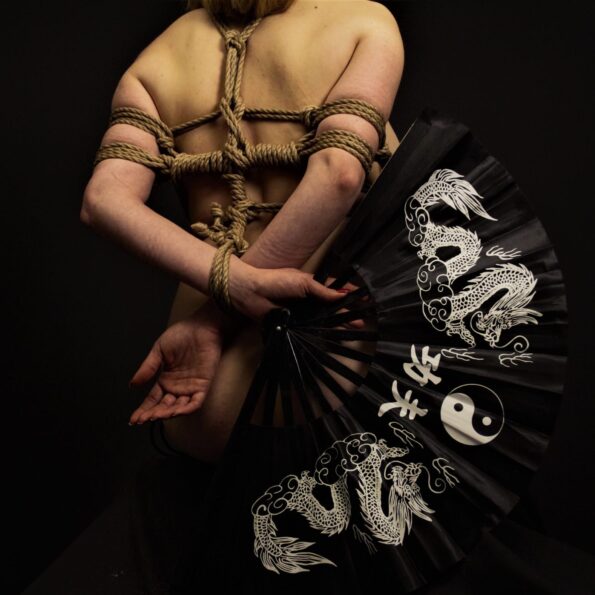


 It can be difficult to pinpoint the exact location of the radial nerve. The rope should be used with attention to the physiology of the person being tied. It will be your choice to give feedback to your rigger and be aware of how your body responds to the rope. You may not notice anything until you are suspended or pressure is applied. Remember, symptoms of radial nerve problems usually start at the fingertips of the hand and work their way up the arm.
 Some people position their thumbs in a hook position to support their elbows, as in the picture to the left. You should be aware that this position can cause problems, but it is important to be comfortable with it. Sometimes it can be difficult to move your hands out of this position while in a sling, as the pressure on your arms increases. If you are uncomfortable, you may not be able to reposition your arms.
 Bu pozisyonun özellikle suspension sırasında baskı ve sıkışmayla sinir problemlerine yol açabileceği muhtemeldir ve risklidir. Bunun yerine arkada ellerinizi serbestçe bırakmanız size daha rahat bir duruş ve güvenlik sağlayacaktır. Sağdaki resimde görüldüğü şekilde bileklerinizi pozisyonlandırmanız sizin için daha iyi olacaktır. Kendi fizyolojinize göre pozisyon ve konumlandırmalarınızı deneyimledikçe geliştirebileceksiniz.
 This type of binding can be used if you prefer your hands to be in a comfortable position behind your back. If you have difficulty keeping your hands in a box behind your back or do not have the flexibility for a position such as the elevated hand position, this may be suitable for you. This is less risky than other bindings used in TK.
 There are as many different harness variations as your imagination can create, and similar to chest harnesses, each has a different function and aesthetic.
 Futumomo zemin bağlamaları için kullanışlı ve konforlu olurken, süspansiyon için oldukça stresli ve acılı birkaç türden biridir. Rigger’ın üst seviyede yetenekleri ve acı adımlarını iyi analiz edebilmesi gerekir.
 Türkçe
 English


 Jute Monkey Fist Flogger 36,35$Remove
 Bondage & Restraint Harness 32,09$
 Choking Collar 27,54$
 Glossy Kelly Wetlook Gloves Price range: 14,00$ through 14,68$