USD
USD 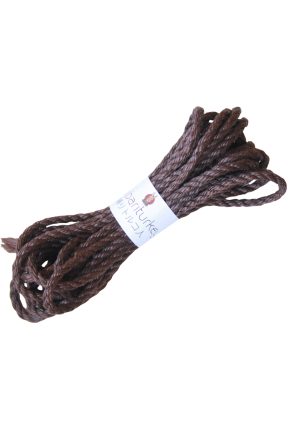

Customers also bought
600 Years of Legacy
From Past to Present
To master the history of Shibari, we will attempt to examine all disciplines under the umbrella of Shibari history.
Rope Bondage Disciplines
Hojojutsu
Kinbaku
Shibari
Fusion (Western)

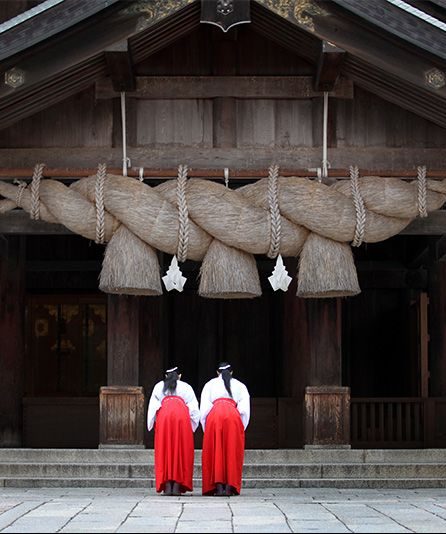
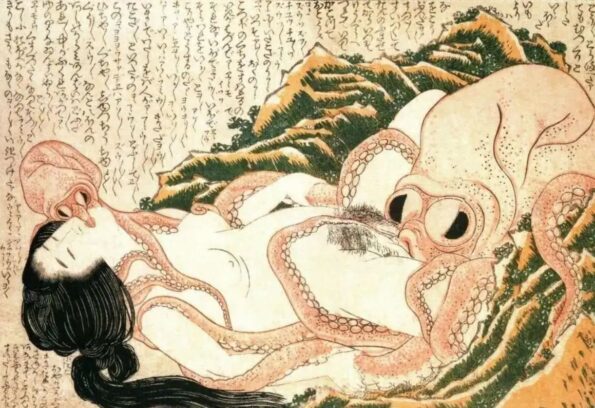

The rising crime rates during this period necessitated organization to maintain public order, leading to the formation of the first local law enforcement agencies. Japan, a region where metalworking was challenging, allocated all its metal resources to war equipment, which naturally encouraged law enforcement to utilize readily available tools like ropes.
As a result, an ancient martial art involving the use of ropes has been unearthed from dusty shelves and put back into use by law enforcement.
Beginning with the establishment of the Kamakura Shogunate in 1192, this warrior era paved the way for the development of martial arts and accelerated the integration of Hojōjutsu into traditional military discipline. The period from the Muromachi era to the Edo Shogunate, established in 1603, was marked by warfare.
Toyotomi Hideyoshi (March 17, 1537 – September 18, 1598), who became a general at age 27 and the ruler of Japan at age 59, unified Japan and ended more than a century of civil war by abolishing slavery. Hideyoshi established a class system and a strong ethical system for the samurai, incorporating Hojojutsu into their training.

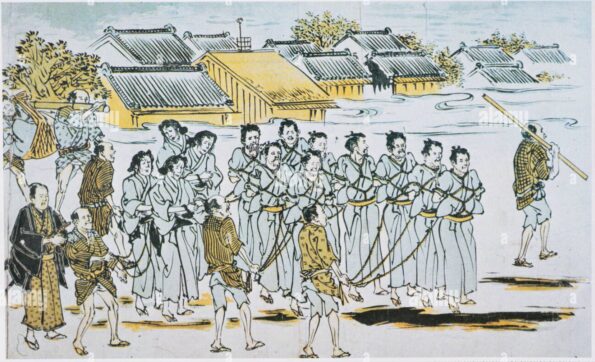
Regardless of the primary purpose, the method of restraint considered not only visual and aesthetic aspects but also the needs and ethical understanding of Japanese society. If the arrested person had no prior convictions, they were allowed to be safely restrained, but not bound in a way that would humiliate them in public. Instead of securing the restraints with knots, the officer would hold the free end of the rope to maintain control and walk behind the prisoner.
In Torinawa, as in hayanawa, many different sizes of ropes were used, usually made of hemp. The rope averaged 6 millimeters in diameter, while its length could reach up to 20 meters. This was used to provide a more secure and long-term restraint compared to hayanawa, for transporting the convict to the place of imprisonment, restricting movement during legal proceedings, and – especially in cases of serious crimes – publicly displaying the convict before execution.
Hojōjutsu is part of the training curriculum for modern Japanese police officers and continues to be taught as an advanced technique in jujutsu schools that teach other Japanese traditional martial arts around the world.
Hojojutsu’To understand why this style became popular in Japan in the 1400s, one must look at Japan during that period. The years 1192–1590, known as the Warrior Age, were marked by threats from foreign invasions, rebellions, and wars between feudal lords.

Although Hojojutsu is primarily known as the origin of Kinbaku and Shibari, this discipline is still practiced. Hojo-jutsu techniques continue to be learned and developed within martial arts circles seeking to master the speed of binding and restraint. In Hojo-jutsu, techniques known as newaza are borrowed from other martial arts disciplines.
Hojojutsu practitioners use different types of ropes and measures;
During the Edo Shogunate, established in 1603, the powerful samurai class continued to use and develop hojojutsu between the 17th and 19th centuries. According to official Tokugawa law, public punishments were administered based on the severity of the crime and the social class to which the offenders belonged. Public execution was intended as a deterrent and a cautionary example.
In addition to its symbolic meaning, even in those times, care was taken to avoid knots in nerves and veins, and it was displayed to the public in an open area for a long time. The official Tokugawa laws regarding the practice of hojojutsu consisted of four short articles;

Rules 2 and 4 are important for understanding the origins of kinbaku and shibari. These rules are still valid today. .
During the Edo period (1603–1868), more than 150 schools of hojojutsu were established. These schools, founded in different regions, developed diverse binding techniques. Each region had its own unique knots and bindings that defined it. The techniques revealed both a deep understanding of human anatomy and a desire to create aesthetically pleasing arrangements. Many techniques and styles of hojojutsu subsequently profoundly influenced modern Japanese kinbaku.
At the beginning of the Edo period, a weary Japan had completely closed itself off from the outside world and begun to heal its wounds. This process created a Renaissance atmosphere in many areas, such as the development of merchants and trade, an increase in literacy rates, and the advancement of art; however, it was also observed that during this period, nobles used kinbaku as an erotic tool to humiliate enslaved women.
With the end of the Edo period in 1867, the Meiji Restoration took place, and the capital was renamed Tokyo. Significant changes occurred in the political and social spheres, as well as in people's lifestyles.
With the Meiji reforms, Japan expanded its trade, which had previously been limited to the Netherlands and China, to include other European countries.
Kabuki theaters, a major element of social life, began to gain popularity, and many traditional kabuki theaters started staging erotic performances involving ropes and suffering.

Although the plays staged in Kabuki theaters were erotic, they were not excessive or sexually explicit. In the early 1900s, Kabuki plays depicting Edo period dramas began to transform a simplified version of hojojutsu into performances. This made the knots more visible and appealing to the audience. The plays, staged with their creative and aesthetic aspects, are still considered among the earliest examples of modern kinbaku.
From the mid-Meiji period onwards, a genre of drama called "Soushi Shibai" (Hero's Drama) developed. Originally, the aim was to depict heroes of rebellion against regime oppression, advocating for freedom and civil rights. Later, the political stance shifted, evolving into a distinct genre with the addition of eroticism, scenes of captivity, and dramatic torture.
Meanwhile, in Europe, the influence of Marquis de Sade and Leopold von Sacher-Masoch had brought about changes not only in sexual and erotic terms. With the rise of psychoanalysis in the 1880s, the terms sadism and masochism emerged and became the subject of the first serious academic articles and research.

After the First Sino-Japanese War, in June 1896, the Hongo Haruki-za Theatre in Tokyo staged a play called “Nisshin Senso – Youchi no Kataki-tan.” It depicted several Japanese nurses being tortured and humiliated by Chinese soldiers in Manchuria, but forgiving their tormentors. This drama used sexual abuse as a pretext under the protective umbrella of nationalism. A fourteen-year-old boy was among the audience at one of these performances, and it deeply affected him. Years later, this young “Father of Kinbaku” would become none other than Ito Seiu, the painter, photographer, and researcher.
’Seme no Kenkyu“ (1928) in JapanTorture He published the first kinbaku photo book (titled "His Work") and organized theatrical performances, also creating the first known suspension works and paintings during this period. Ultimately, he went down in history as the father of modern Japanese kinbaku.
Kinbaku, Seiu Ito Thanks to this style, it had become more erotic and sexual in the early 20th century. The works he produced in the ukiyo-e style depicted women who were bound, had disheveled hair, were tortured, naked, or had their clothes forcibly torn.

Seiu Ito's works include "snow torture" and "mother being hung upside down". Yomikiri Romance And Kitan Club These studies were published in Japanese journals. These works caused great controversy in Japanese society. Dealing with this controversy... Seiu Ito’This brought him to the brink of both financial and moral ruin. During the Second World War, in the massive Tokyo air raid organized by the American army, Ito lost all of his works.
In the 1920s and 30s, other artists also dealt with similar themes within the avant-garde Ero-Guro (’erotic grotesque’) movement, but Ito was the first to explicitly create works with sadomasochistic themes.
As Japan and Europe, particularly Germany, grew closer in cultural and military fields, an anti-militarist and dissident art movement emerged in the early twentieth century, in the 1920s and 1930s, influenced by Germany's Weimar culture.’ero-guro”"It had emerged. Although no artwork related to this movement was produced during World War II, it reappeared in post-war Japan with themes of slavery, torture, and eroticism.".
Kinbaku's recognition in the West was greatly influenced by the ero-guro (grotesque erotic – ero-guro nansensu) movement. Both Germany and Japan, through their military policies, forced art, artists, and the public into a compulsory, imposed, and predetermined product; this intense militaristic pressure led to the formation of a dissenting segment within society.
It was in this atmosphere that the avant-garde ero-guro emerged; it was a rebellion, a protest against disrespect for art, and a critique of a regime that considered lust and sexual desire as inherently bad things.
In light of these developments in Japan, “Seme no Kenkyu”It's worth noting that this is a torture study.
In the 1950s, Western magazines discovered Ito's work and began publishing it. Although still controversial, Kinbaku gained popularity in both Eastern and Western societies, and in 1960 the Japanese Artists Association awarded Seiu Ito a prize for his art.
“The terms "sadism" and "masochism" began to be used widely in Japan in the 1950s. BDSM The term itself emerged and began to be used in the West in the 1980s. As can be seen, long before BDSM became traditionalized, the concepts of "sadism" and "masochism," associated with different elements, existed in Japan and were also adopted as methods.
For the S&M segment of modern BDSM, the reason the Japanese interpretation is based on torture was the work of Seiu Ito. This was the “beauty of suffering,” rooted in the depths of Japanese aesthetics, depicting the flow and intensity of emotion within a context of being bound together by pain.
In this sense, it is not surprising that Kinbaku is mentioned as one of various torture methods. Tying someone up not only prevents them from escaping but can also be used for humiliation and torture.

During these years, erotic magazines were being pirated in America. The first bondage-themed photographs were taken and published by John Willie and Irving Klaw, and these photographs are considered the first professional works of today's fetish culture. But even during these years, although the West was not yet fully familiar with kinbaku, it witnessed the birth of a legend: Betty Page.
Bettie Page was a pin-up girl and a favorite of Irving Klaw. She modeled in hundreds of erotic, fetish, and bondage-themed shoots, helping to popularize and spread diverse sexual orientations in America.
During the same years, Japan, emerging from war with defeat and devastation, began to experience an erotic revolution in the 1950s and 60s. Magazines like Kitan Club and Yomikiri Romance, which published the first nude bondage photographs on the theme of Kinbaku, became quite popular in Japan in the 1950s.

Kitan Club magazine, a global phenomenon, began its golden age in the 1960s. This magazine frequently combined sexual, erotic, and exotic themes with stories and even science fiction, drawing attention to alternative content, topics, and preferences.
From today's perspective, this magazine can be considered a valuable historical representative of the formative period of Japanese social media culture. Furthermore, Kitan Club also acted as a supporter of kinbaku culture, with contributions from writers, illustrators, and photographers. Suma Toshiyuki, Tsujimura Takashi, Through his research and writings on kinbaku, he contributed to its recognition worldwide.
Kitan Club became a source of inspiration and a school for future generations. Many illustrators, writers, and photographers created new works and developed radical ideas thanks to this magazine.
“The term "Nawashi" was first used in the 1950s. Tsujimura Takashi It is believed to have been used by Kitan Club Magazine.
In 1962, Dan Oniroku's novel "Hana to Ebi" (Flower and Snake) began its serial publication in Kitan Club.

In 1965, Osada Eikichi, Osada Eikichi began his first stage performances, which astonished the entire S&M world, under the umbrella of Kitan Club. Now considered a pioneer of kinbaku stage performance, these shows by Osada Eikichi were the first experimental dramas of the S&M genre. In the late 60s and early 70s, with the popularization of "Pink Movies," people like Konuma Takashi began to take on the role of kinbaku directors in film productions.
Meanwhile, sexual revolution movements were dramatically on the rise in Europe and America, and everything began to change radically with the Stonewall riots of 1969. These years marked the first time kinbaku emerged from the shadows and began to appear in more public spaces.
After the 1970s, kinbaku became more visible, and some performance and photography artists began to take a closer interest in it as a culture around the world. These years were a period of merging Western and Eastern styles and techniques. In this period, called Fusion Shibari, Japanese traditionalism was blended with Western eroticism and aesthetics., Irwin Klaw And John Willie The bondage heritage was unified.
In the 1980s, Kinbaku masters began creating videos with erotic Kinbaku themes. During this period, a Kinbaku master could also be an actor, producer, and director.
The recognition of modern kinbaku in the West and its development as an art form Nobuyoshi Araki’'s contributions cannot be underestimated.

Described as the photographer of Kinbaku, or captivity, Araki began his interest in photography during his university years, but his professional recognition in this field came after the 1990s. The death of his wife in 1990 marked a turning point in Araki's art, and from then on he sought to redefine sexuality, which he believed encompassed both life and death.
With his Kinbaku series, titled Self, Life, Death, he has become one of the leading names in contemporary art. His works are exhibited in important museums such as Tate Modern and the San Francisco Museum of Modern Art, and he is represented by major galleries and auction houses.
Araki says that he uses the bound, sometimes hanged, naked women to symbolize love and eroticism rather than sexuality. He says that he only binds a woman's body with ropes because he cannot bind her heart. With this statement, he underlines that true bondage is spiritual bondage. The artist says, "When I bind women, I embrace them. I equate bondage with a kind of feeling of attachment," thus softening the harsh, fetishistic, and extreme feelings in the image with an underlying meaning expressed through feelings of love, eroticism, and commitment.
Thanks to artists like Araki, shibari has become more than just a part of BDSM; it's an element of performance and art, with many artists using and continuing to use it to express different things.

The post-war 1950s and 60s were the golden age of Kitan Club magazine. This magazine frequently incorporated sexuality, torture, abuse, and exotic traditions, sometimes blending them with stories and even science fiction as central themes. It skillfully drew attention to certain alternative tastes and preferences. From today's perspective, this magazine can be considered a valuable historical representative of the formative period of Japanese social media culture. Furthermore, Kitan Club, He also acted as a supporter of kinbaku culture, working in roles such as writer, illustrator, and photographer. Suma Toshiyuki, Tsujimura Takashi, He contributed through his research and writings on kinbaku.
With the development of printing technology, photographs began to be published. It is believed that the term "Nawashi" was first used by Takashi Tsujimura in Kitan Club Magazine in the 1950s. In 1962, Dan Oniroku's novel "Hana to Ebi" (Flower and Snake) began serial publication in Kitan Club.
In 1965, Osada Eikichi began his first stage performances under the Kitan Club, which astonished the entire S&M world. Now considered a pioneer of kinbaku stage performance, these shows by Osada Eikichi were the first experimental dramas of the S&M genre. With the popularization of "Pink Movies" in the late 60s and early 70s, Takashi to the location People like these began to take on the role of kinbaku directors in film productions. In 1974, facing bankruptcy, the Nikkatsu film company...’Flower and Snake”He decided to make it as a last resort, and the film was an unexpected success.
Kinbaku (緊縛) is a Japanese word meaning "tight binding." Kinbaku-bi (緊縛美) means "beautiful tight binding." In Japanese SM circles, kinbaku is used to describe specific, artistic, and erotic bindings. Some baku (binders/masters) prefer to use the word kinbaku to describe more emotionally charged scenes, while others use it to allude to origins and traditions. The technique and method are highly sophisticated. Nowadays, some circles also use the term "deep binding" to describe kinbaku.
The word Shibari began to be used in the West in the early 1990s to describe the bondage art of Kinbaku. Shibari (縛り) means ’decorative binding,“ referring to the graceful and emotional merging of two people, leading to a completely different awareness of their bodies and the establishment of a bond between them.
There is much debate between shibari and kinbaku as to which is more appropriate than the other. Westerners seeking to distinguish between the terms use the word shibari to refer to its more visual, decorative, and erotic nature, while kinbaku refers to the artistic, bondage-focused, emotionally charged practice as a whole.
Kinbaku is based on several important techniques, many of which are derived from Hojojutsu bonds, but Hojojutsu techniques have been significantly modified to make it usable and safe in modern conditions.
The traditional view is that the term 'shibari' is an inappropriate and misused form of Japanese vocabulary by Westerners. The word is not used in Japanese in the traditional context/meaning of bondage. While 'shibari' is found among the names of many specific bonds/knots, it is not traditional to refer to the entire activity and practice (like 'Diamond Diamonds' and 'Portuguese Bowline Knots') in this way. Instead, Kinbaku is the preferred term for artistic or erotic bondage within traditional Japanese bondage and S&M circles.
This view contradicts the way the word is actually used in books, periodicals, and in the discussion of rope bondage in Japanese. A more traditional view is that shibari is a term used in Japan for erotic bondage and is interchangeable with the term kinbaku. Itoh Seiu used this term in the 1950s, as did many well-known Japanese baku artists from the 1950s to the present day.

Nureki Chimuo, Yukimura Haruki, Akechi Denki, Ryuuji Takeda, Tsujimura Takeshi, Arisue Go, Randa Mai, Osada Steve, Miura Takumi, Nagaike Takeshi, and Minomura Kou (and others). One of Nureki Chimuo's 1980s video series is titled "Introduction to Shibari." Some claim this is a somewhat disguised definition, suggesting that shibari was increasingly imported into Japan from the West. Most Japanese kinbakushi, therefore, are widely used globally. Shibari does not object to the term.
Shibari is a subjective experience, but it transcends gender, language, religion, body type, and race. From our perspective, our language, color, and gender are all part of shibari itself, a merging of two bodies wishing to connect. Shibari is not merely a sexual experience; it is a powerful tool for therapy, relaxation, coping, and body awareness, and a radical method for communication.
Osada Steve 長 … ス 長 ー ー ィ: “…In my working style, I generally make a clear distinction between Shibari and Kinbaku. I would say it took me eight years to get a feel for Shibari, and I was about to complete my third year when I began to decipher the mysteries of Kinbaku. When Sensei Osada Eikichi (長 田英吉) decided to accept me as his student, it was more than just an opportunity given to me, and if it had only been an opportunity, I would still be tying up women without knowing what I was doing. In my scenes at StudioSIX, I spend time developing a connection with the model, thus achieving an emotional exchange that transcends the technical aspects of the bonds. I define almost all my work in all other events and videos, such as live shows, as Shibari. For me, Shibari is the only true way to connect in a Japanese style and with a consistent Japanese aesthetic.“
The Western discipline that developed on the foundations of the East is often referred to as Fusion or Western. Although it draws from the Eastern discipline that has evolved over centuries, it has developed its own dynamics, methods, and practices, taking them to an erotic dimension and utilizing them. While some of the natural beauty and sub-forms of Kinbaku and Shibari have been compromised, there are also innovations that it has contributed when viewed as a whole.
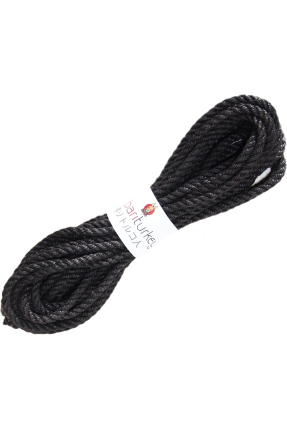
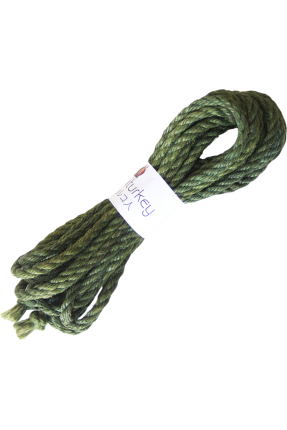
Fusion bondage (shibari) uses different types of ropes (usually soft ropes);
Originating in Japan, shibari has undergone simultaneous development in both East and West since the beginning of the 20th century. This process, which began with Seiu Ito, started in the West with John Willie in the late 1940s. Willie's development... G-String Tie These are techniques that have survived from that period to the present day and are still being debated.
[cool-timeline layout=”default” show-posts=”14″ order=”ASC” date-format=”Y” story-content=”full” skin=”default” icons=”YES” animations=”none”]
 Türkçe Türkçe
 English