USD
USD  (TRY ₺)

In BDSM, restraint, inability to control one's behavior, and acceptance of bondage are often seen as choices, but risk and stress factors are always present. The risks are particularly higher and different for those experiencing these things for the first time.

Kinbaku, which we don't entirely see as part of BDSM / Shibari Such experiences are inherently restrictive and can be painful. This falls within the scope of scenarios that those sharing the scene can determine through negotiation. Positioning, posture, turning, twisting, and bending—the control of the person tying them, i.e., the rope top or rigger—and the practices involved in determining the body's positions must be entirely agreed upon beforehand.

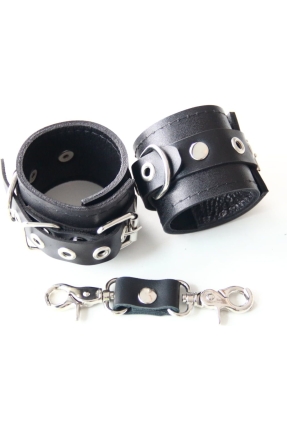
Environmental factors included in the restriction, to be used in suspension or ground attachments, toys (One handcuff Or, if a lock is to be used, it's not enough to simply ensure you have the key to the handcuff. You also need to ensure that the key can open the handcuff.) or objects increase the risk and danger. No matter how much partners trust each other, the bottom is always in a stressful situation.
The fact that all life practices and experiences are subjective remains unchanged here as well. Events are related to the meanings individuals give them. What is dangerous for one person may be controllable for another; what is stressful for one may not be for another. This subjectivity and uniqueness applies to every situation and the individuals involved. The way people interpret events determines elements such as stress and danger. They classify them as stressful or dangerous, and they do so quite quickly.

According to R. Lazarus, stress arises "when the demands of the environment in one's eyes exceed one's capabilities." Approaching it from this perspective, before a scene, the ball should convey all the risks with deadly honesty and should not offer suggestions to the bottom to accept.https://www.ncbi.nlm.nih.gov/pmc/articles/PMC3110961/)
“Trying to gain validation by saying things like, "Look how experienced I am, how many people I've connected with, how good I am, how skilled I am," means you're (consciously or unconsciously) treading the line between "constructing consent" and "violating consent.".

Because some practices in BDSM cannot be carried out according to guidelines like SSC,“awareness of danger/risk”"This needs to be defined on both sides, which forms the framework we call RACK.". Shibari Practices that fall into the category of dangerous practices are evaluated within this scope.
The nature of danger is also quite subjective. It's not the events themselves that matter, but their meaning. When events are perceived as dangerous, a stress response is triggered. Stress, in turn, arises as a result of a cognitive behavior, of "valuation.".
The stress response will change erratically the moment a person (in this case, bottom or top) identifies a situation as dangerous. The best approach is to eliminate the stress factor by trying to be as safe as possible in any situation, considering all risks, and reinforcing this with "before care.".

 Türkçe
 English