 USD
USD 
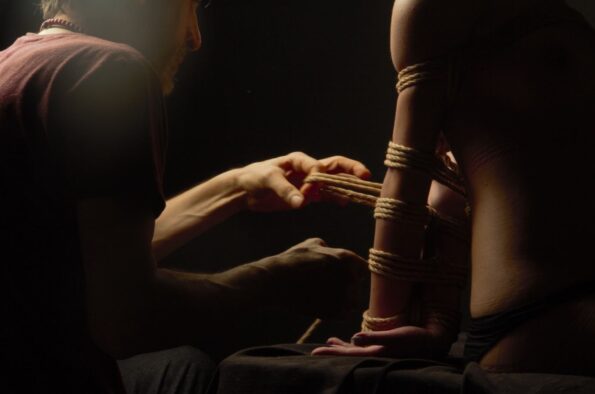
Our explanations of what Shibari and Kinbaku are “History of Shibari” We explained this in our article titled [article title]. The meaning these terms convey may differ or be the same depending on the context in which they are used. It's a matter of individual preference and experience. However, it's necessary to understand that the titles practitioners bestow upon themselves stem from a normative basis. In the world of social media, titles are not given to individuals by themselves. Those who approach masters, experts, or those believed to be competent bestow these titles upon them/deem them worthy.
Today, whether we call it kinbaku or not... Shibari, The roles of those performing the scene, such as top/bottom, are a bit more complex for the top, or the person tying things up. Some call themselves "Nawashi" (縄師) or "Bakushi" (縛師), while others call themselves Kinbakushi or rigger. Now we will try to look at the differences between these terms and their origins.
kinbakushi with bakushi(1) These words are actually indistinguishable and used interchangeably. However, the "-shi (師)" suffix in words other than "rigger" means "teacher" or "master," and is generally used as a term for experts who impart knowledge. In this case, the words we will examine are "Nawa (縄)" and "Baku." "Nawa" means "rope," and "Baku" means "to tie/bind tightly." In translation, we can render it as "Rope Master" and "Binding Master." Essentially, some ideas can be offered regarding why different terms are used for the same action. "Bakushi" focuses on the performance and influences the audience, while "Nawashi" concentrates on communication with the partner and conveying emotions. Another distinction is that "Nawashi" makes or at least works with the ropes themselves, while "Bakushi" focuses on the act of tying rather than the ropes.
There could be different reasons for these differences. In Japan... Shibari, part of the sophisticated, commercially constrained pornography industry. This industry's repetitive nature Shibari Instead of focusing on established stages, their sensitivity to innovative and original ideas may have created pressure to innovate in stages and even in titles. The use of the Japanese terms "Bakushi" and "Nawashi," with their distinctly harsh and soft tones, can also be a matter of personal preference.2 The words "Bakushi" and "shibari" seem to have emerged in the mid- or late 20th century (intended to refer to the person doing the binding) during this period of innovation. It is quite clear that one of the main purposes of using Japanese words in shibari and, in fact, creating a myth, is the industry's attempt to romanticize the Japanese art of bondage and generate capital.
On the other hand, the most commonly used term, "Rigger," originated in fusion (western) shibari and is a term avoided in the Japanese bondage world. This term, which began to be heard in the 1980s, seems to be primarily intended to refer to practitioners in a technical sense. This word, referring to technique and professionalism, is frequently and quite widely used as a title preferred by those who demonstrate their technical expertise on stage rather than expressing emotional connection.
NOTES
- It first appeared in the West in 2005. While its origin is unknown, it is used interchangeably with bakushi. https://japaneseropeart.com/RopeArt/nawashi.html
- Mr. Tatu provides the following information regarding the origin of this word: “According to Yukimura, the word “nawashi” may have been used by Minomura Kou in the Kitan Club in the 1950s.’
 Türkçe
 English





Comments are closed.