USD
USD 
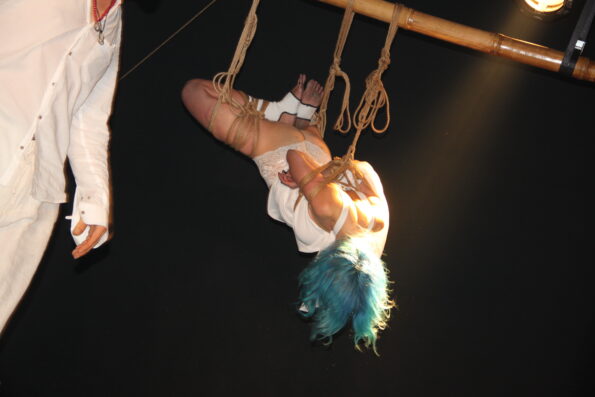
Supension can be an incredible experience for both the person doing the suspending and the person being suspended. It is recommended that both parties take their time, developing their practical and physical skills and awareness.
To acquire a skill, practice and dedication are essential. Warnings about an experience like suspension are usually given to the Top (the person doing the suspending). However, one or both partners may desire it. From this perspective, we wanted to share some warnings and advice for both parties who have sufficient enthusiasm and desire to be suspended and to do the suspending.
The following text contains many links, basic information, and some practical suggestions. We recommend that you review it carefully before you begin.
- If the person tying the knot doesn't know what they're doing, a wrongly positioned knot can press on a nerve or blood vessel; and if the person being tied isn't communicating, reporting numbness, tingling, or anything that's wrong, the person tying the knot can't take action.
- Incorrectly positioned threads can cause nerve damage within minutes, and healing can take weeks or months. In some severe cases, it may never fully heal.
- If a misplaced nodule cuts off blood flow, clots can form. Blood clots in the bloodstream can cause serious problems, including stroke, coronary heart disease, and even more. to death may be the reason.
- In applications such as suspension systems, the displacement of the main load-bearing cables or the snapping of one of the main load-bearing cables can cause serious injury and trauma to the person being secured.
For all these reasons, the information we prepared earlier... safety guides read again.
In our trainings, we provide detailed information on risk and safety awareness from both the Top (connecting) and Bottom (connecting) perspectives. You can learn much more than what we have summarized here by attending our trainings.
Don't make a mistake! Shibari, Especially suspension, it's a very dangerous practice that can lead to serious injuries and is definitely an edge play game.
BALL
Suspended Work: Practice with objects and gain experience before using someone in a suspension. Practice to understand vital details, especially lifting/lowering weight, tying knots in a suspension, and securing attachment points. This object could be a crate or a chair. Medical concerns become much more important when in a suspension. Joint or muscle problems can quickly arise, and the person in the suspension (bottom) cannot be moved as easily as they would in ground work. This presents a significant challenge in addressing certain issues. Blood pressure and circulatory problems are obviously even more significant. However, many people don't realize there are underlying issues like diabetes and hypoglycemia; these dangers make your model even more susceptible to changes in blood pressure and temperature. A person with diabetes can feel unwell very quickly in a hot room under physical stress. Before starting, ensure your model/partner is adequately nourished and hydrated.
An Experienced Model : When doing your first suspension setup, find a bottom you can trust to communicate openly and completely with – ideally, find a bottom with suspension experience. You can learn suspension best from an experienced bottom after instructors – they can tell you where the ropes are too tight or where the pressure is in the wrong place, and provide all sorts of information that will make your setup much better.
Mentor : Find an instructor/mentor who has the knowledge and skills to guide you, observe your progress during your first few attempts, and provide live corrections. No matter how good you do, this is no substitute for in-person support from an instructor.
Before Care (PreCare): Physical contact and communication with your partner are part of shibari. Sit opposite each other in a comfortable environment and touch your partner to measure their body temperature before tying them up; this is your reference body temperature, and keep it in mind. You will be able to tell if this temperature drops or rises excessively during tying or hanging from this reference temperature. It is important to negotiate and adjust the ambient temperature before the scene. Ask if there are any things your model would not want to see or that would be dangerous in the tying environment. A comfortable space for you and them will mean a comfortable tying.
Practice..Practice..Practice : Even with experience, mastering a single knot can take years. Remember you're just starting out and don't neglect practice. Practice with your non-dominant hand, with different objects, and by creating different stress scenarios. Friction practices, rope contact, and knot tying are important for gaining rope control. Instead of trying to learn all the knots, aim to master a basic and secure knot.
BOTTOM
Preparation: There are things the person being bonded needs to learn and do. Suspension may not be easy or comfortable for someone who hasn't experienced it before. Doing stretching and warm-up exercises beforehand will be very helpful. It's especially important to communicate your body's strengths and weaknesses to your partner.
Communication : The knot must be positioned correctly so that the ropes do not compress any nerves or blood vessels, but every body is unique and different. Your nerve pathway may be slightly above or below average, so it is vitally important to immediately inform your partner if you experience any numbness, tingling, or other unexpected sensations. If you notice that your partner has tightened the knot too much, preventing you from moving your fingers, toes, or limbs, you must tell them IMMEDIATELY. In such a case, the person tying the knot needs to undo or correct what they have done.
Know your limits: You know your body, its needs, and its capabilities. Work within those limits and avoid pushing yourself too hard. Make sure you share any medical issues you have with your partner, and that they share theirs with you, especially if you have joint, diabetes, muscle, heart, or circulatory problems.
Even in the worst-case scenario, you would never want a rigger to have a heart attack while you're hanging.
Learn from experience: For your first suspension experience, it's best to do it with an experienced rigger who can guide and assist you. They can explain in detail how you should expect it to feel and when it might cause problems. After this stage, you can work with less experienced partners and share your own experience. If you have concerns that the person doing the rigging isn't experienced enough, ask someone you trust to observe and assist you for the first few times.
Attention : Regardless of their experience level, partners who are just getting to know each other should first build trust and talk as much as possible. No matter what, you should remember that you are just getting to know the other person's body, and that even they are in the process of exploring their own. When you reach a level where you can communicate nonverbally, then the time is right.
Construction of Consent: When recounting your experiences with someone who wants to tie you down in any way, you should consider whether you are being subjected to consent building and manipulation. While this can apply to both parties, in most cases, the person attempting the tie-down is seen as the one building consent. If you notice such a situation, you should consider whether you want to go through a risky experience like suspension with that person until you are sure you are safe.
Are you ready to suspend/be suspended? Do you have everything it takes?
 Türkçe
 English