USD
USD 
Shibari nedir sorusuna, en temel tanımıyla Japon ip bağlama pratiğidir diyebiliriz. Ancak bu tanım tek başına yeterli değildir. Çünkü Shibari; It's not simply about securing someone with a rope; it's a multifaceted field involving aesthetics, body awareness, rhythm, trust, communication, and responsibility. For some, it's a form of artistic expression, for others a way to forge an intense bond between partners, and for still others, a disciplined and demanding technical learning process.
Because "“What is shibari?The most accurate answer to the question, "What is Shibari?", is this: Shibari is more than just a physical form created with rope; it's a practice that gains meaning through intention, communication, boundaries, and safety. If you're new to the subject, instead of just looking at visually impressive tying photos, you need to understand its logic, language, and safety framework first.
What is Shibari?
Shibari, "Rope tying" is a word of Japanese origin and generally means "to tie." Today, however, it is more commonly used to describe the Japanese practice of rope tying, which has decorative, sensory, and technical aspects. The aim of this practice is not always simply to restrict movement; sometimes it aims to create lines and forms on the body, sometimes to generate emotional intensity, and sometimes to create a focused space for interaction between partners.
For this reason Shibari It differs from an ordinary binding act. How the rope is positioned on the body, where the pressure is distributed, the person's breathing, posture, comfort, and psychological state are all part of this practice. A good binding is evaluated not only on how aesthetically pleasing it looks, but also on whether it is safe, controlled, and based on mutual consent.
Are shibari and kinbaku the same thing?
This is one of the frequently asked questions. In everyday usage, the words shibari and kinbaku are often used interchangeably. However, in some communities, "shibari" is preferred to describe a broader, more visual space, while "kinbaku" refers to a more intense, emotional, or contextual practice. Although this distinction is not used uniformly in all sources, it is important for those who wish to delve deeper into the subject.
If you'd like to read about these differences in more detail Shibari vs Kinbaku And The Difference Between Rigger, Nawashi, and Bakushi in the Shibari – Kinbaku Distinction You can also take a look at their articles. At the beginner level, the most important point is not which word you use, but how you approach the practice, with what level of knowledge, and with how confidently.
Why is a brief history of Shibari important?
The historical development of Shibari, This encompasses a transformation of the rope, from its functional and symbolic place in Japanese culture to its application in performance, photography, education, and community practices in the modern era. While many modern bonding techniques we see today are influenced by historical references, they are not direct historical repetitions; they are reshaped by a combination of contemporary needs, safety knowledge, and aesthetic preferences.
However, the critical point for beginners here is not to romanticize historical knowledge, but to understand tradition not as an element of "atmosphere," but as discipline and responsibility. Because knowing history alone does not mean securing connections. Without practical knowledge, an awareness of anatomy, and an ethical approach, the practical relevance of historical references is limited. In this context... Seiu Ito and the Bondage Revolution with Yukimura Haruki The content prepared for it also provides important background.
Why is Shibari so popular?
People Reasons for being interested in shibari They are not the same. Some people are drawn to the aesthetic appearance; some enjoy the rhythm and sense of focus created by the rope; others want to establish a more intense relationship of trust and surrender with their partner. For some, this area intersects with photography, performance, and the performing arts; for others, it is a completely private and personal experience.
The important thing here is to know that not everyone is looking for the same thing. This awareness is crucial in education, partner selection, and setting boundaries. An experience that is meditative for one person may be too intense for another. While aesthetics may be paramount for one person, technical precision may be more important for another. Therefore, any beginning made without discussing expectations remains incomplete.
Is shibari always erotic?
No. Shibari In some contexts, it may be part of an erotic experience; however, it is not always reduced to sexuality. Training scenes, performances, photographic works, technical practices, and body awareness-focused studies can be independent of erotic content. Therefore, viewing shibari solely as a "sexual game" narrows the scope of the field.
Similarly, the fact that something is purely aesthetic or artistic doesn't automatically make it risk-free. Whether in an erotic, artistic, or educational context, rope makes contact with the body, applies pressure, and has physical consequences. Therefore, safety rules remain the same regardless of the context.
Shibari equipment for beginners
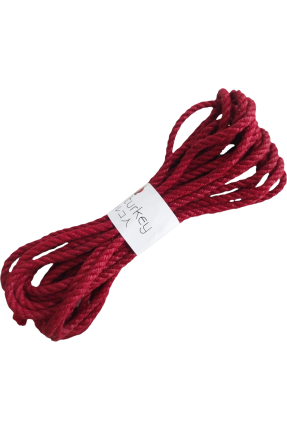
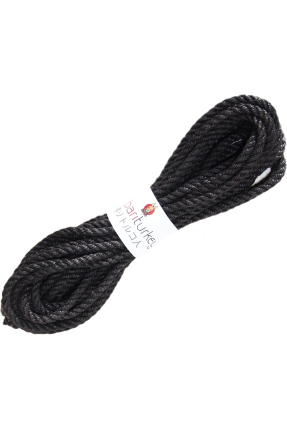
The most common mistake beginners make is prioritizing difficult figures over basic equipment and safety principles. However, the essentials for a good start are quality rope, safety scissors, a calm environment, and a fundamental knowledge base. This is especially true when it comes to purchasing equipment. BDSM bondage equipment And Shibari & Kinbaku Categories are one of the best starting points for guidance.
When choosing yarn, looking at color alone is not enough. Thickness, fiber structure, texture, how it feels on the skin, care requirements, and intended use should all be considered. For a more detailed selection guide, see [link to guide]. Shibari Line Selection, Materials, Characteristics, and Shibari Beginner's Guide, also to set up the equipment correctly Creating a Shibari Rope Set You can read their writings.
 Limited Stock

Why is safety the most important issue at Shibari?
Shibari While it may look elegant visually, incorrect application can lead to serious problems. These include pressure on the wrong areas, circulatory issues, numbness, nerve compression, skin irritation, panic attacks, and strain due to positional issues. Therefore, the best approach for a beginner is to focus on "basic ground connections and secure communication first.".
Suspension, advanced positions, and prolonged intense bonding, while frequently seen on social media, are not the starting point. The first thing to learn is not about flashy bonding, but about reading the body and recognizing risks early. Bonding should be assessed immediately if the partner experiences numbness, tingling, sudden coldness, color changes, shortness of breath, or panic. For a more advanced perspective on suspensory bonding... Recommendations and Correct Approaches for Shibari Suspension The content can also be examined.
Therefore, safety scissors are not just "nice to have," but essential equipment in practice. The maintenance of the rope used is also important. Regular cleaning and proper storage are essential. Rope Care and Disinfection, for humidity control Clean the Rope of Moisture After Each Scene or in Humid Environments Their writings are helpful.
What should be discussed before the first shibari experience?
A good one shibari experience, It doesn't start with holding the rope; it starts with talking. Partners' expectations, boundaries, triggers, past experiences, physical sensitivities, and ways of stopping should be discussed from the beginning. Saying "I'll tell you if I'm uncomfortable" is often not enough, because in an intense experience, a person may be slow to clearly express their feelings.
Therefore, it's necessary to establish a safe word or stop signal, to check in regularly throughout the bonding process, and to observe the partner's state after the bonding ends. Consent is not a one-time approval; it's an active agreement that continues throughout the process. Silence doesn't always mean consent. For those who want to read more about this topic in a broader context... SSC and CCCC Concepts of Consent The content also provides strong support.
How to get started learning Shibari?
The ideal starting point is learning the basic principles rather than striving for complex figures. First, you need to understand the structure of the rope, then work on basic windings, tension control, pressure distribution, and simple knots. The goal here isn't to "quickly look impressive," but to build a solid foundation.
- First, learn the basic concepts.
- Choose your rope and safety equipment wisely.
- Keep initial trials short and low-intensity.
- Pay close attention to body language feedback.
- After each practice session, discuss what went well and what you found challenging.
Initially, it was among the most technically read content. Single Column Tie, Single-Limb or Cuff Bondage Techniques And Single Rope (Ichinawa) Technique It includes basic content such as these. It also helps you master the terminology. Shibari Short Dictionary It is also quite useful.
How to have a good partner experience on Shibari?
The quality of the connection is just as important as the technical accuracy of the rope. If you focus solely on "completing the position" without asking your partner how they feel, the practice becomes mechanical. However, a good bonding session is shaped by tempo, breathing, body language, trust, and attention. Therefore, the psychological comfort of your partner is as important as their physical comfort.
After the bond is broken, care is also part of the process. Providing water, regulating body temperature, offering tactile comfort, talking about any emotional intensity experienced, and checking for signs of trauma are all important. Good aftercare isn't just about "being gentle"; it's about taking the physical and emotional impact of the experience seriously. To examine this emotional dimension more closely... Empathy “Muganawa” in Shibari” And Shibari and Stress The articles can also be read as supporting evidence.
Is Shibari suitable for everyone?
Anyone interested, of any kind shibari practice Similarly, it may not be suitable. A more cautious approach is needed for individuals with circulatory problems, nerve sensitivities, recent injuries, shoulder and neck problems, certain skin sensitivities, or panic reactions. This doesn't mean a person can never try; however, instead of proceeding with a standard plan, an adapted, slow, and conscious framework is necessary.
Furthermore, it shouldn't be expected that everyone will enjoy shibari in the same way. Some people like the feel of the rope, some don't. Some enjoy the visual aspect but don't want to be tied. Some want to learn how to tie but don't enjoy being tied. All of this is normal. The important thing is to view the practice not as an obligation, but as a conscious choice.
With the right rope selection, safety equipment, clear communication, and controlled practice. shibariye You can approach it in a much more conscious way. For basic concepts... to the dictionary, to start safely beginner's safety guide, for the communication dimension consent and negotiation letter By providing a link, you can take the user deeper into the site.
Frequently Asked Questions
What is Shibari?
Shibari is a Japanese practice of rope tying. It has aesthetic, technical, sensory, and communicative dimensions; it doesn't simply mean tying.
Is there a difference between shibari and kinbaku?
Yes, some sources consider shibari to be more general and visual, while kinbaku is seen as a more intense and contextual expression. However, in everyday usage, they are often used interchangeably.
How do I start learning Shibari?
Basic concepts, proper rope selection, safety information, and simple ground knots should be the starting point. Advanced techniques and slinging exercises are not recommended at the beginner level.
Is shibari dangerous?
Yes, if administered incorrectly. Risks such as circulatory problems, numbness, nerve compression, and panic can occur. Therefore, safety information is essential.
What equipment is needed for Shibari?
High-quality bondage rope, safety scissors, and a controlled practice area are essential. Carabiners and additional equipment can also be considered depending on the intended use.
Is shibari always a sexual practice?
No. Shibari can be practiced as an artistic, performative, educational, or purely sensory experience. It doesn't always have to carry an erotic context.

 Türkçe
 English