What is Shibari? ? sorusuna uzun bir cevap sizi bekliyor. Shibari tarihçesi şeklinde atılan başlığa rağmen temel kavramın "Bondage"We would like to remind you that ".
Shibari is named with different disciplines under itself and is classified into two parts as East / West based on factors such as source, development process, historical factors. "Fusion Bondage / Shibari", known as Western Bondage, differs from traditional Japanese Shibari (East) forms. Traditional Eastern disciplines are also separated among themselves and with disciplines such as Shibari and Kinbaku due to different views.
600 Years of Legacy
From Past to Present
In order to master the history of shibari, we will try to examine all disciplines under the history of shibari.
Bondage with rope has been prevalent since ancient times, and traces of it have been found in archaeological remains. The act of binding, seen in frescoes, tiles, vases and sculptures, has always been a cultural heritage among societies.
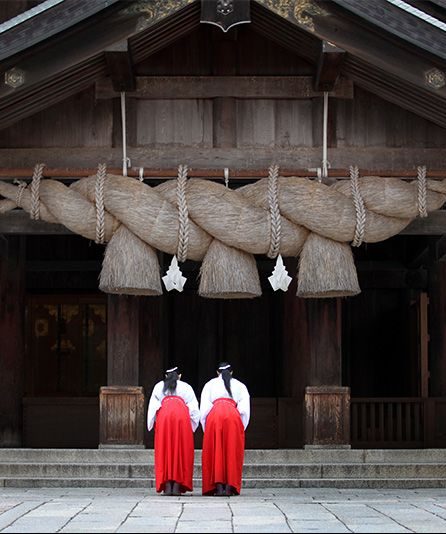
But there is a culture that has shouldered a centuries-old legacy in the evolution of shibari from martial art to eroticism, and from eroticism to performance art. In Japan, ropes and knots are essentially a cultural part of daily life. Sometimes, ropes and knots can be found in Shinto shrines as talismans against evil called shimenawa, sometimes in gardens and sidewalks as Tome-ishi, and sometimes as gifts given as wishing stones. In addition, traces of traditional and personal use can be found. It can be seen in many areas from kimonos to tying bamboo together, from boat building to landscaping.
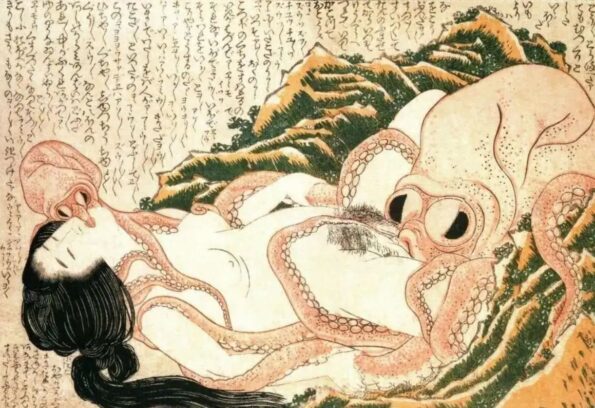
Tarihi kayıtlar shibari’nin, yeni evliler için cinsellik eğitimi amacıyla basılan Japon erotik eserleri Shunga’larda kinbaku tasvirleri görüldüğünü belirtir. 1814 yılında Edo döneminde yapıldığı düşünülen, (Katsushika Hokusai ‘'s) "“The Fisherman's Wife's Dream" is considered the first reference to kinbaku and shibari. It is seen in Shunga books and Ukiyo-e This print depicts the ecstasy of a woman captured by an octopus. Here, the octopus's arms are depicted wrapping around the woman's body like a rope.
*The rope tied to the entrance of Shinto shrines is called shimenawa. Traditionally woven from hemp, but nowadays more often from rice or wheat straw, this rope is decorated with flags and banners. According to Shinto belief, evil cannot cross the boundary formed by the shimenawa.
To understand today's modern Shibari, its ancestor HojojutsuWe need to look at the brief history of .
1400’lerde popülerlik kazanmış olan Hojojutsu (hojo-jutsu); bir kişiyi ip veya halatla esaret altına almak için, bir çok ekolden, birçok farklı malzeme, teknik ve yöntemi kapsayan Japon savaş sanatıdır.. Torinawajutsu ve Nawajutsu gibi isimlerle de anılmaktadır.
Hojōjutsu can be divided into two broad categories. The first one is, Hayanawa. Hayanawa, meaning "fast rope," is a technique of capturing and binding prisoners using ropes, usually 3-4 mm in diameter. It was performed with cords called sageo, which samurai carried wrapped around their sword scabbards. Law enforcement officers, however, carried these ropes in small bundles.
The second one Torinawa (seizure-ropes) were passed around the prisoner's body, neck and arms, while one end of the rope was wrapped in a way that would hurt the prisoner. This was usually done by law enforcement during arrests and when the prisoner resisted, so it had to be done quickly.
What is Shibari? Shibari History (Image 20)
Toyotomi Hideyoshi (1539 – September 18, 1598) was the leader who reunified Japan after 120 years of political fragmentation.
During this period, increasing crime rates necessitated organization to maintain public order, and the first local law enforcement forces began to be established. Japan, a region where metalworking was difficult, devoted all of its metal resources to war equipment, which naturally encouraged law enforcement forces to use quickly available tools such as ropes.
In this situation, an ancient martial art performed using ropes was taken out of its dusty shelves by law enforcement and started to be used again.
This warrior period, which began with the establishment of the Kamakura Shogunate in 1192, laid the groundwork for the development of martial arts, and accelerated the incorporation of Hojōjutsu into traditional military discipline. The period from the Muromachi period to the establishment of the Edo Shogunate in 1603 was marked by wars.
Toyotomi Hideyoshi (March 17, 1537 – September 18, 1598), who became a general at the age of 27 and the ruler of Japan at the age of 59, unified Japan and ended more than a century of civil war by abolishing slavery. Hideyoshi established a class system and a strong ethical system for the Samurai, focusing on their training, Hojojutsu‘It also includes 'yu'.
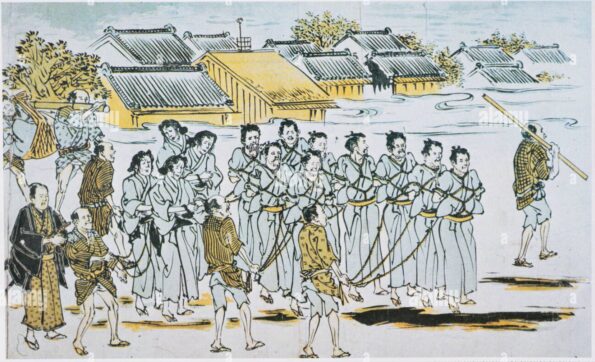
A samurai who was held captive by being bound with Hojo-Jutsu.
Whatever the purpose, the method of restraint was designed with attention to the needs and ethics of Japanese society, as well as to visual and aesthetic concerns. If the prisoner had no previous convictions, he was allowed to be restrained securely, but he was not allowed to be tied in a way that would humiliate him in public. Instead of securing the restraint with knots, the officer would hold the free end of the rope and walk behind the prisoner to maintain control.
In torinawa, as in hayanawa, hemp ropes were generally used, in many different sizes. The average thickness of the rope was 6 millimeters in diameter, while lengths could reach up to 20 meters. This was used for transportation to the place of incarceration, to restrict movement during legal proceedings, and - especially in the case of serious crimes - to provide a more secure and long-term binding compared to hayanawa, for public display before execution.
Hojōjutsu is part of the training curriculum for modern Japanese police officers and continues to be passed down as an advanced technique in jujutsu schools around the world that teach other traditional Japanese martial arts.
HojojutsuTo understand why it became popular in Japan in the 1400s, it is necessary to look at Japan at that time. The years 1192-1590, known as the Warrior Period, were marked by Japan's threat from foreign raids, rebellions, and wars between feudal lords.
Samurai Secrets: 1888 Martial Arts Manual for Cops Revealed
Hojojutsu, temelde Kinbaku ve Shibari’nin kökeni olarak bilinmesine rağmen, bu disiplin hala uygulanmaktadır. Hojo-jutsu teknikleri gerçekte bağlama ve esaret altına alma hızını kavramak isteyen SM çevrelerinde öğrenilmeye ve geliştirilmeye devam etmektedir. Hojo-jutsu’da, newaza olarak bilinen teknikler, diğer dövüş sanatları disiplinlerinden ödünç alınmıştır.
Hojojutsu uygulayıcıları farklı türde ip ve ölçüler kullanırlar;
Traditional natural fiber ropes are still preferred.
4-6mm diameter ropes are used.
The use of colored thread is rare, but black is common.
Rope lengths vary between 3 and 5 meters.
1603 yılında kurulan Edo Shogunluğu döneminde, güçlü olan samuray sınıfı, 17. yy 19. yy arasında hojojutsu’yu kullanmaya ve geliştirmeye devam eder. Resmi Tokugawa kanunlarına göre halka açık cezalandırmalar, suçluların suçlarına ve ait oldukları toplumsal sınıflara göre yapılmaktaydı. Halkın önünde yapılmasıyla, caydırıcı olması ve ibret alınması amaçlanıyordu.
In addition to this symbolic meaning, care was taken to ensure that no knots were formed in the nerves and veins, and that they were displayed to the public in an open area for a long time. Official Tokugawa laws Hojojutsu Its provisions on its application consisted of four short articles;
Not allowing the prisoner to escape.
Not to cause any physical or mental injury.
Not allowing others to see the techniques.
To ensure that the result looks beautiful after tying.
Hojojutsu, Ittatsu Ryu Okulu, “Shin Nijuu Hishi”"True Double Diamond" and "Shin Tonbo" (real dragonfly) bindings. Zukai Hojoujutsu from Fujita Seiko.
Rules 2 and 4 are important to understanding the origins of kinbaku and shibari. These rules still apply today.
1603 – 1868 yılları arasında Edo döneminde, 150’den fazla hojojutsu okulu kuruldu. Farklı bölgelerde kurulan okullarda, farklı bağlama yöntemleri geliştirildi. Çeşitli bölgelerin kendine has, onları tanımlayabilecek düğüm ve bağları vardı. Teknikler hem insan anatomisinin derinlemesine anlaşılmasını hem de estetik açıdan hoş düzenlemeler yaratma arzusunu ortaya çıkardı. Bundan sonraki dönemlerde Hojojutsu’nun birçok teknik ve tarzı, modern Japon kinbakusunu derinden etkiledi.
At the beginning of the Edo period, Japan, exhausted, had completely closed itself off to the outside world and started to heal its wounds. This process brought about a Renaissance atmosphere in many areas such as the development of merchants and trade, the increase in literacy rate, the development of art, and it was also seen that noblemen used kinbaku as an erotic tool to humiliate captive women.
With the end of the Edo period in 1867 Meiji Restoration takes place and the capital's name is changed from Edo to Tokyo. Major changes occur in political and social areas and in people's lifestyles.
With the reforms of the Meiji period, the Japanese expanded their trade with other European countries, in addition to the trade they had only with the Netherlands and China.
Kabuki theaters, which were a major element of social life, began to become popular and many traditional kabuki theaters began to stage erotic shows featuring rope and pain.
Kabuki Tiyatrosunda Bo-Shibari"
Although the plays staged in Kabuki theaters were erotic, they were not excessive or sexually explicit. In the early 1900s, Edo Period dramalarını tasvir eden kabuki oyunları, hojojutsu’nun basitleştirilmiş bir versiyonunu performanslara dönüştürmeye başladı. Bu, düğümleri izleyicilere daha görünür ve çekici kılmıştı. Yaratıcı ve estetik yönleriyle sahnelenen oyunlar hala günümüz kinbakusunun ilk örnekleri olarak değerlendirilir.
From the mid-Meiji period onwards, a genre of drama called "Soushi Shibai" (Hero's Drama) developed. Originally, the aim was to depict heroes of rebellion against regime oppression, defending freedom and civil rights. Later, the political stance shifted, becoming characterized by scenes of captivity and dramatic torture. eroticism By adding to it, it evolves into a different genre of drama.
Meanwhile, in Europe, the influence of Marquis de Sade and Leopold von Sacher-Masoch had brought about changes not only in sexual and erotic terms. With the rise of psychoanalysis in the 1880s, the terms sadism and masochism emerged and became the subject of the first serious academic articles and research.
Birinci Çin-Japon Savaşı’ndan sonra, 1896 Haziran’ında Tokyo’daki Hongo Haruki-za Tiyatrosu “Nisshin Senso – Youchi no Kataki-tan” adlı bir tiyatro eseri sahneledi. Birkaç Japon hemşirenin Mançurya’daki Çinli askerler tarafından işkence görüp küçük düşürüldüğünü, ancak işkencecilerini affettiğini konu alıyordu. Bu drama, milliyetçiliğin koruyucu şemsiyesi altında cinsel zulmü bahane olarak kullanıyordu. Bu gösterilerin birinde seyirciler arasında on dört yaşında genç bir adam bulunuyordu ve bu gösteri onu derinlemesine etkilemişti. Yıllar sonra, bu genç “Father of Kinbaku” anılacak ressam, fotoğrafçı ve araştırmacı olan Ito Seiu ‘dan başkası değildi.
“Seme no Kenkyu” (1928) in JapanTorture He published the first kinbaku photo book called His Work) and organized theater performances, the first known suspension He also produced his studies and paintings during this period. He eventually went down in history as the father of modern Japanese kinbaku.
Kinbaku, Seiu Ito Thanks to this, it had become more erotic and sexual in the early 20th century. Ukiyo-e The works he produced in this style depicted women who were bound, had disheveled hair, were tortured, naked, or had their clothes forcibly torn.
A photo from Seme no Kenkyu.
Works such as “snow torture” and “hanging mother upside down” by Seiu Ito Yomikiri Romance And Kitan Club These studies have caused great controversy in Japanese society. To combat this controversy Seiu Itobrought Ito to the brink of both financial and moral bankruptcy. During World War II, during the massive Tokyo air raid by the American army, Ito lost all of his works.
In the 1920s and 30s, other artists also dealt with similar themes within the avant-garde Ero-Guro (’erotic grotesque’) movement, but Ito was the first to explicitly create works with sadomasochistic themes.
As Japan and Europe, particularly Germany, grew closer in cultural and military fields, an anti-militarist and dissident art movement emerged in the early twentieth century, in the 1920s and 1930s, influenced by Germany's Weimar culture.’ero-guro"" had emerged. Although no artwork related to this movement was produced during World War II, it reappeared in post-war Japan with themes of captivity, torture, and eroticism.".
Kinbaku's recognition in the West was greatly influenced by the ero-guro (grotesque erotic – ero-guro nansensu) movement. Both Germany and Japan, through their military policies, forced art, artists, and the public into a compulsory, imposed, and predetermined product; this intense militaristic pressure led to the formation of a dissenting segment within society.
The avant-garde ero-guro that emerged in such an atmosphere was a rebellion, a protest against the disrespect for art, and a criticism of the regime that considered lust and sexual desire as essentially bad things.
In light of these developments in Japan, “Seme no KenkyuIt is useful to realize that ” is a work of torture.
In the 1950s, Western magazines discovered Ito's work and began publishing it. Although still controversial, Kinbaku gained popularity in both Eastern and Western societies, and in 1960 the Japanese Artists Association awarded Seiu Ito a prize for his art.
The terms “sadism” and “masochism” came into common use in Japan in the 1950s. BDSM The term itself emerged and began to be used in the West in the 1980s. As can be seen... BDSM’Long before the traditionalization of this practice, the concepts of "sadism" and "masochism," associated with different elements, existed in Japan and were also adopted as methods.
For the part of modern day BDSM that is defined by S&M, the Japanese interpretation of torture was based on the work of Seiu Ito. This was the “beauty of suffering” that was deeply rooted in Japanese aesthetics, depicting the flow and intensity of emotion in a context, being connected by pain.
In this sense, it is not surprising that Kinbaku is mentioned as one of the various torture methods. Tying someone up not only prevents them from escaping, but can also be used for humiliation and torture.
American model Betty Page (1923 – 2008) with photographer Irving Klaw (1910 – 1966), circa 1955. (Photo by Archive Photos/Getty Images)
During these years, erotic magazines were being pirated in America. The first... bondage themed photos John Willie ve Irving Klaw tarafından çekilip basılmış ve bu fotoğraflar günümüz fetiş kültürünün ilk profesyonel çalışmaları kabul edilmiştir. Ama bu yıllarda da batı henüz kinbaku ile tam anlamıyla haşır neşir olmamış olsa da bir efsanenin doğuşuna şahitlik etmişti: Betty Page.
Bettie Page bir pin-up kızı ve Irving Klaw’ın gözdesiydi. Yüzlerce erotik, fetiş ve bondage temalı çekimde modellik yaparak farklı cinsel eğilimlerin Amerika’da yayılmasını ve popüler olmasını sağladı.
During the same years, Japan, emerging from war with defeat and devastation, began to experience an erotic revolution in the 1950s and 60s. Magazines like Kitan Club and Yomikiri Romance, which published the first nude bondage photographs on the theme of Kinbaku, became quite popular in Japan in the 1950s.
Item Vintage Japanese BDSM Kinbaku Magazine KITAN CLUB 4/1969 Shibari Oniroku Dan
Kitan Club magazine, a phenomenon all over the world, began its golden age in the 60s. This magazine frequently used sexual, erotic and exotic traditions, sometimes combining short stories and even science fiction with main themes, and drew attention to alternative content, topics and preferences.
From today's perspective, this magazine can be considered a valuable historical representative of the formative period of Japanese SM culture. In addition, the Kitan Club also acted as a promoter of kinbaku culture. With roles such as writer, illustrator and photographer Suma Toshiyuki, Tsujimura TakashiHe contributed to the recognition of kinbaku all over the world with his research and writings on kinbaku.
Kitan Club became a source of inspiration and a school for future generations. Many cartoonists, writers and photographers created new works and developed radical ideas thanks to this magazine.
The term “Nawashi” was first used in the 50s Tsujimura Takashi It is believed to have been used by Kitan Club Magazine.
In 1962 Dan Oniroku's “Hana to EbiHis novel “Flower and Snake” began its serial publication in Kitan Club.
Osada Eikichi
In 1965, Osada Eikichi, began his first stage performances under the umbrella of Kitan Club, which astonished the entire S&M world. These shows by Osada Eikichi, who is now considered the pioneer of kinbaku stage performance, were the first experimental dramas of the S&M genre. In the late 60s and early 70s, with the popularization of “Pink Movies”, people like Konuma Takashi began to take on the role of kinbaku directors in film productions.
Meanwhile, sexual revolution movements were on the rise dramatically in Europe and America, and everything began to change radically with the Stonewall uprising of 1969. These were the first years when kinbaku began to emerge from the shadows and be seen in more public spaces.
After the 70s, kinbaku became more visible and began to become a culture that the whole world was more interested in by some performance and photography artists. These years were a period when the styles and techniques of the West and the East merged. In this period called Fusion Shibari, Japanese traditionalism was blended with Western eroticism and aesthetics, Irwin Klaw And John Willie the bondage legacy was consolidated.
In the 1980s, Kinbaku masters began to make erotic kinbaku videos. During this period, a kinbaku master could also be an actor, producer and director.
The recognition of modern kinbaku in the West and its transformation into an art form Nobuyoshi Araki's contributions cannot be underestimated.
Nobuyoshi Araki
Described as the photographer of kinbaku or bondage, Araki began his interest in photography during his university years, but his professional name was heard in this field only after the 90s. The death of his wife in 1990 created a turning point in Araki's art, and from then on he tried to redefine sexuality, which he believed contained both life and death.
He has become one of the important names of contemporary art with his Kinbaku series called Self, Life, Death. His works are exhibited in important museums such as Tate Modern and San Francisco Museum of Modern Art and are represented by important galleries and auction companies.
Araki says that he uses tied, sometimes hanging, naked women to symbolize love and eroticism rather than sexuality. He says that a woman only ties her body with ropes because she cannot tie her heart. With this statement, he emphasizes that the real bondage is spiritual bondage. The artist says that when I tie women, I hug them. He says that I identify bondage with a kind of bondage feeling, softening the harsh, fetish and extreme feelings in the image with the subliminal reading he expresses with feelings of love, eroticism and commitment.
Thanks to artists like Araki, shibari has become more of a performance and art element than just a part of BDSM, and many artists have used shibari to express different things and continue to do so.
Cultura Inquieta – Kitan Club Japanese Prints, Club Magazine, Printing Ink, Dark Photography
The post-war 50s and 60s were the golden age of Kitan Club magazine. This magazine frequently used sexual, torture, abuse and exotic customs, sometimes combining them with short stories and even science fiction as its main themes. It skillfully highlighted some alternative tastes and preferences. From today's perspective, this magazine can be considered a valuable historical representative of the formative period of Japanese SM culture. In addition, Kitan Club, also acted as a promoter of kinbaku culture. Working in roles such as writer, illustrator and photographer Suma Toshiyuki, Tsujimura Takashi, contributed with his kinbaku research and writings.
Baskı teknolojisinin gelişmesiyle birlikte, fotoğraflarda yayınlamaya başladı. “Nawashi” teriminin ilk kez 50’li yıllarda Tsujimura Takashi tarafından Kitan Club Magazine’de kullanıldığına inanılmaktadır. 1962’de Dan Oniroku’nun “Hana to Ebi” adlı romanı (Flower and Snake) seri yayınına Kitan Club’da başladı.
In 1965, Osada Eikichi began his first stage performances under the Kitan Club, which astonished the entire S&M world. Now considered a pioneer of kinbaku stage performance, these shows by Osada Eikichi were the first experimental dramas of the S&M genre. With the popularization of "Pink Movies" in the late 60s and early 70s, Takashi to the location People like these began to take on the role of kinbaku directors in film productions. In 1974, facing bankruptcy, the Nikkatsu film company...’Flower and Snake""He decided to make it as a last resort and option, and the film was an unexpected success.".
KINBAKU & SHIBARI
Kinbaku (緊縛) is a Japanese word meaning "tight binding." Kinbaku-bi (緊縛美) means "beautiful tight binding." In Japanese SM circles, kinbaku is used to describe specific, artistic, and erotic bindings. Some baku (binders/masters) prefer to use the word kinbaku to describe more emotionally charged scenes, while others use it to allude to origins and traditions. The technique and method are highly distinct. Nowadays, some circles also use the term "deep binding" to describe kinbaku.You can read about the difference between Kinbaku and Shibari here..)
The word Shibari began to be used in the West in the early 1990s to describe the bondage art of Kinbaku. Shibari (縛り) refers to "decorative binding", the process of integrating two people into a completely different level of body awareness and bonding with grace and emotion.
There is much debate between shibari and kinbaku about which is more appropriate than the other. Westerners who want to differentiate these terms use the word shibari to refer to its more visual, decorative, and erotic nature, while kinbaku refers to the artistic, bondage-oriented, sensual practice as a whole.
Kinbaku, birçoğu Hojojutsu bağlarından türetilen oldukça önemli tekniklere dayanıyor, ancak günümüz şartlarında kullanılabilmesi ve güvenli hale gelebilmesi için Hojojutsu teknikleri önemli ölçüde değiştirilmiştir.
Geleneksel görüş şudur ki ‘shibari’ terimi Japonca kelime hazinesinin batılılar tarafından yerinde olmayan ve kötüye kullanımıdır. Sözcük, Japonca’da, geleneksel esaret bağlamında / anlamında kullanılmadığını gösterir. Birçok özel bağın/düğümün isimleri arasında ‘shibari’ bulunur, ancak bu şekilde tüm aktiviteyi ve pratiği (Diamond Diamonds ‘ve’ Portuguese Bowline Knots’) olduğu gibi adlandırmak geleneksel değildir. Bunun yerine, Kinbaku geleneksel Japon esaret ve S&M çevrelerinde sanatsal ya da erotik bağlama için tercih edilen terimdir.
Bu bakış kelimenin gerçekten kitaplarda, süreli yayınlarda ve Japoncada halat esaretinin tartışılmasında kullanılan yöntemle çelişmektedir. Daha geleneksel bir görüş şudur: shibari Japonya’da erotik esaret için kullanılan ve kinbaku terimi ile değiştirilebilir bir terimdir. Itoh Seiu, 1950’lerden günümüze kadar, bir çok iyi bilinen Japon bakusu gibi, 1950’lerde bu terimi kullandı.
Nureki Chimuo, Yukimura Haruki, Akechi Denki, Ryuuji Takeda, Tsujimura Takeshi, Arisue Go, Randa Mai, Osada Steve, Miura Takumi, Nagaike Takeshi ve Minomura Kou (ve diğerleri). Nurkei Chimuo’nun 1980’lerin video serilerinden biri, Shibari’ye Giriş başlığını taşır. Bazı iddialar bunun bir şekilde gizlenmiş bir tanımlama olduğunu ve shibari’nin giderek artan bir şekilde Batı’dan Japonya’ya ithal edildiğini ifade eder. Çoğu Japon kinbakushi, küresel anlamda yaygın bir şekilde kullanıldığı için Shibari does not object to the term.
Shibari is a subjective experience, and does not discriminate based on gender, language, religion, body, or race. From our perspective, our language, color, and gender are the shibari itself, and it is the integration of two bodies that want to connect with it. Shibari is not just a sexual experience, it is a powerful tool for therapy, relaxation, struggle, and body awareness, and a radical method for communication.
Osada Steve 長 … ス 長 ー ー ィ: "… Çalışma tarzımda genellikle Shibari ile Kinbaku arasında belirgin bir ayrım yapıyorum. Shibari hakkında bir fikir edinmenin sekiz yıl sürdüğünü söyleyebilirim, ve Kinbaku’nun gizemlerini deşifre etmeye başladığımda üçüncü yılımı doldurmak üzereydim. Sensei Osada Eikichi (長 田英吉) beni öğrencisi kabul etmeye karar verdiğinde bana verilen bir fırsattan fazlasıydı ve sadece fırsat olsaydı, hala ne yaptığımı bilmeden kadınları bağlıyor olurdum. StudioSIX’teki sahnelerimde, modelle bir bağlantı geliştirmek için zaman harcar ve böylece bağların teknik yönlerini aşan duygusal bir alışveriş gerçekleştiririm. Canlı şovlar gibi diğer tüm etkinlikler ve videolardaki neredeyse tüm çalışmalarımı, Shibari şeklinde tanımlarım. Benim için Shibari, Japon tarzında ve tutarlı Japon estetiği ile bağlamanın tek gerçeğidir. "
Fusion (Western) Bondage (Shibari)
Doğunun temelleri üzerinde gelişen batı disiplini genellikle Fusion veya Western olarak adlandırılır. Yüzyıllardır gelişen doğu disiplininden beslenmesine rağmen, kendi dinamiklerini, yöntem ve pratiklerini geliştirmiş, erotik bir boyuta taşımış ve kullanmıştır. Kinbaku ve Shibari’deki doğal güzelliklerin ve alt formlarının bir kısmı tehlikeye girmiş olsa da, bir bütün olarak bakıldığında kattığı yenilikler de vardır. (Comparison of Japanese style and Western style.)
Fusion bondage (shibari) uses different types of ropes (usually soft ones);
Ropes include synthetic products such as nylon and MFP
Generally 8-12mm diameter rope is used.
The use of colored threads is quite common
Rope lengths vary.
The Historical Process of Shibari in the East and West
Japonya kökenli olan shibari, 20.yy’lın başlarından bu yana doğu ve batıda eş zamanlı bir gelişim göstermiştir. Seiu Ito ile başlayan bu süreç, Batı’da 19401’lı yılların sonlarında John Willie ile başlar. Willie’nin geliştirdiği G-String Tie It is one of the techniques that has survived from that period to the present day and is still being debated.
Shibari, Japon kökenli ip bağlama pratiğidir. Estetik, teknik güvenlik, rıza, iletişim ve beden farkındalığı üzerine kurulu bir bağlama sanatı olarak tanımlanabilir.
Shibari ne demek?
Shibari kelimesi Japoncada “bağlamak” anlamına gelir. Batı’da Japon tarzı ip bağlama sanatını ifade etmek için yaygın biçimde kullanılır.
Shibari ile kinbaku arasındaki fark nedir?
Shibari genellikle bağlama eylemini ve teknik yapıyı ifade ederken, kinbaku bağın duygusal, estetik ve yoğun deneyim boyutunu vurgulayan bir kavram olarak kullanılır.
Shibari sadece cinsel bir pratik midir?
Hayır. Shibari erotik ya da BDSM bağlamında kullanılabilir; ancak aynı zamanda performans, fotoğraf, beden farkındalığı, güven ilişkisi ve sanatsal ifade alanlarında da yer alabilir.
Shibari’ye başlamak için ne gerekir?
Shibari’ye başlamak için doğru ip seçimi, temel güvenlik bilgisi, rıza ve iletişim becerisi gerekir. Başlangıçta tek kolon ve çift kolon gibi temel tekniklerle ilerlemek daha güvenlidir.
Is shibari dangerous?
It can be risky if applied incorrectly. Risks include nerve compression, circulatory problems, falls, panic, or tissue pressure. Therefore, training, safe scissors, constant communication, and body monitoring are important.
Shibari’ye güvenli bir başlangıç yapmak için temel teknikleri, doğru ip seçimini ve beden sinyallerini birlikte değerlendirmek gerekir. Daha detaylı güvenlik bilgisi için Shibari Health and Safety Guide You can also check out the article.
 USD
USD  (TRY ₺)



 Türkçe
 English





 Glossy Kelly Wetlook Gloves Price range: 14,00$ through 14,68$
 Pony Play Leather Bit Gag 36,35$
 Pup Play Boxer Leather Dog Mask 143,18$